
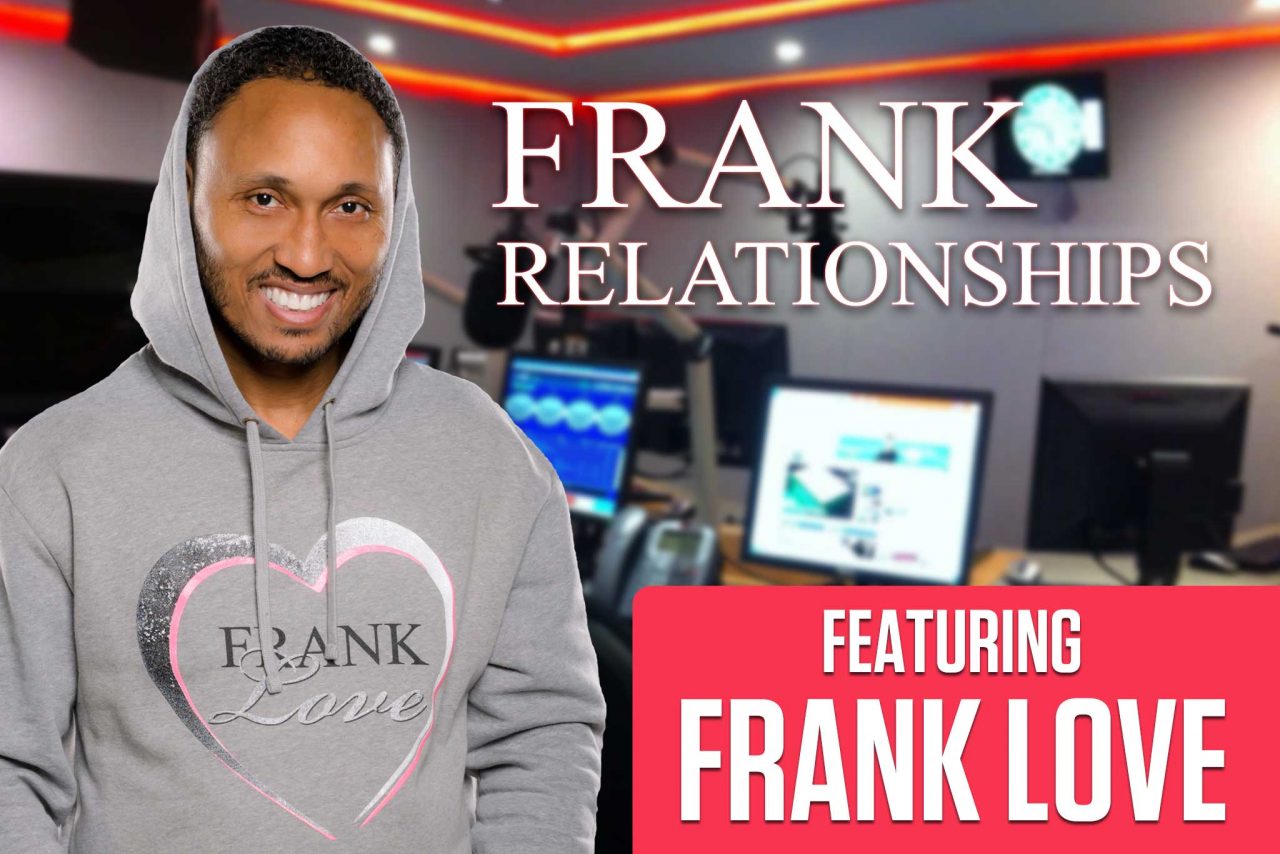
Podcast Episode:
Can rejection be an exciting and positive experience? We’ll find out on this edition of Frank Relationships.
____________________________________________________________________
FRANK RELATIONSHIPS: JASON COMELY ON “REJECTION THERAPY”
Guest: Jason Comely
Date: April 18, 2016
Frank: Can rejection be an exciting and positive experience? We’ll find out on this edition of Frank Relationships.
Yeah. As always, those are my babies. Thanks for getting daddy’s daughter today.
Welcome to Frank Relationships where we provide a candid, fresh and frank look in the relationships with goals of acceptance, respect and flexibility. I’m Frank Love and you can find me, my blog and my various social media incarnations at franklove.com.
You can also find me on ABC’s Good Morning Washington most Friday mornings during the 9 o’ clock hour. If you’re listening to the show on Blog Talk Radio, please follow us and if via iTunes, please subscribe so that you can effortlessly get each show each week.
Also, if you’re enjoying the show and of course you are, please share with your family and/or friends on your favourite social media platform. We are looking to add new friends to our social media family over the course of the next week so please help us, help our community by spreading the word about the show.
Greetings to my super duper co-host, Nancy Goldring.
Nancy: Hi, Frank.
Frank: How are you?
Nancy: Fabulous.
Frank: The consummate generalist she is…
Nancy: Indeed, indeed.
Frank: Are we switching that up any time soon?
Nancy: Not yet. Yes, today I think we’ll stick with it I’m into too much pressure…
Frank: Alright. We’re also joined by today’s visiting co-host, Sonia Benson.
Sonia: Hello.
Frank: What’s up, Sonia?
Sonia: I’m good. Good, good, good.
Frank: Who are you and what do you do when you’re not co-hosting as it is to my show?
Sonia: Got ya. Yes, I am Sonia Benson and I’m an intimacy coach.
Nancy: Awesome.
Sonia: And a spiritual counsellor.
Nancy: Okay.
Sonia: Yes, so what that usually entails is me supporting someone in taking a look at their relationships with first starting with themselves and also with others and also seeing how to have those be more intimate and allow themselves to go into deeper levels of vulnerability.
Nancy: Nice! Nice, nice, nice.
Sonia: Yes.
Nancy: Okay.
Frank: I’m curious. I asked this last week but who do you think you’re going to get along with best today—me or Nancy?
Sonia: Well, you know, I think—
Nancy: Jeff.
Jeff: I knew it wouldn’t be Frank.
Nancy: It’s never Frank.
Sonia: Never Frank.
Frank: I am never [unclear / delighted]…
Sonia: Yeah… well, you know, I was going to say probably we’ll lean more towards to Nancy because you know, we’ve had some conversations in the past, Frank…
Frank: Okay.
Nancy: Mercy.
Sonia: Oh yeah, we’ve…
Frank: Know each other for a while.
Sonia: He’s rubbed me in different directions… and we don’t always see eye to eye so, you know…
Nancy: Okay. Alright.
Sonia: But it’s always interesting.
Frank: Way to get it started, Sonia. As is the case, this week with Sonia, there’s a visiting guest host chair available each week here in the studio. If you’re in the Washington D.C. area or travelling to the D.C. area and want to join us in the studio on a given Thursday morning, email me at frank@franklove.com and let me know.
Today’s guest is an entrepreneur and author that once had the fear of being rejected. To address this fear, he created the game “Rejection Therapy.” This game has been hailed as the latest self-help hit in the US by the UK Daily Mail.
So if you, like me, want to know how to get over rejection, when your comfort zone becomes a cage and how to play the Rejection Therapy Game, then stay tuned as your Frank Relationships Team talks with Jason Comely.
Welcome to the show.
Jason: Great to be here, Frank. Hi, Nancy.
Frank: How are you?
Nancy: Hi. How are you?
Jason: And hi, guest.
Sonia: Yes, you know Jason…
Nancy: Listen Jason, for a second, right? For just a second, when we asked Sonia who do you think you’re going to get along with best and she said Nancy, and then she said you know because we’ve had some dealings in the past? I was like “I don’t think I’ve ever met someone Sonia.” So when she was talking about herself—
Frank: She was talking about me.
Nancy: —and Frank right? I was thinking, “Wait a minute, one of the cards says convinces stranger that they know you.” And I said, “Is she rocking the game already?”
Sonia: Already. Already without even knowing it.
Nancy: I’m telling you… Oh my goodness, my brain is fried over rejection therapy right now…
Frank: And ironically, Sonia was rejecting me.
Nancy: Imagine that…
Sonia: I… you know…
Nancy: She’s taking it like a man…
Sonia: In my diplomatic way, so…
Frank: Who needs diplomacy? You’re talking to Frank…
Jeff: He’s used to it.
Sonia: Yeah.
Nancy: You’re helping him grow as a person.
Sonia: yes, I am. Yeah.
Frank: Jason, before we get to deep into your interview, one of the things we do each week is check in to see what’s going on in the world of relationships and I’d like you to join in on that conversation. Do you mind?
Jason: Sure.
Frank: Alright so—
Jason: Love to.
Frank: Nancy, you got anything?
Nancy: Actually, yes.
Frank: For the first time—
Nancy: For the first time ever.
Frank: Nancy has some issues introducing.
Nancy: Mercy.
Frank: I’m dying to hear this.
Sonia: Alright.
Nancy: It’s just not a news [unclear] right? So I took Jeff’s lead and I went to Buzzfeed, right? So on Buzzfeed, there was a little article that talked about or expectations of our lives and the line was I our 30s but I thought, I don’t think it stops in our 30s, right?
Sonia: Right.
Nancy: So I talked about how when you’re in your 30s, you think you’re going to live in a million dollar house, and that you probably live in as a… you know… hundred thousand dollar house.
Sonia: Yeah, exactly.
Nancy: You think you’re going to be the boss and you’re probably still an underling at the office… and I thought, I said okay, Frank is going to say “so what does this have to do with relationships?” Well…
Frank:Ding, ding, ding…
Nancy: What occurred to me—
Sonia: You know him so well.
Nancy: —is that we bring those expectations for what we want for our lives into the relationship.
Sonia: Oh yeah.
Nancy: And often, we partner with people that we think are going to accelerate our course towards the million dollar house, being the boss at work, and driving the sexy car.
Sonia: Right.
Nancy: We just… you know, all of that is lined up with what we want ultimately for ourselves.
Sonia: Yes.
Nancy: And I just had a conversation… yesterday actually with a friend who was basically saying that she was stressed. And what she was stressed about was essentially her life not lining up and looking the way she wanted it to look. And what is that? That’s an expectation conversation.
Sonia: Oh yeah, definitely.
Nancy: And I wasn’t—we didn’t have the time to really… for me to like peel back the layers on that and have her see that… maybe things weren’t as bad as she thought but that it was based on what she was comparing her life to potentially.
Sonia: Yes.
Nancy: that may have her be in the space of dissatisfaction, maybe quite unwarranted.
Sonia: Right, right. Exactly.
Nancy: So yeah.
Frank: Somebody’s listening and they needed to hear that right there.
Sonia: Yes, exactly.
Nancy: Well I hope so.
Sonia: Yeah.
Nancy: Because I hope you don’t have anything grizzly for me to [unclear]… you know I’ve really… I need to be uplifted.
Frank: Okay. Jason, you got anything on that? You got any comment on what she just said?
Jason: Well you know, what came to mind is… a story of the zen master who in front of a group of people, he said he’s coming near the end of his life and he said, “I want to share with you the secret as to how I maintained equanimity.” And he said, “Because I have no expectations—”
Nancy: Wow.
Jason: “—I have no preference.” That was his… his secret and it seems sort of like a short cut to enlightenment and happiness is to…
Frank: Ease up…
Jason: Be more open to the bigger picture, right? So and… the thing is, what I’m doing right now, people ask “What do you do? What do you call yourself” that kind of thing. And I don’t really know. I don’t know anybody else that actually does that kind of stuff that I do. I would have never planned for that but I’m glad I was kind of open to that—
Frank: Right.
Jason: —and not really fixated on a particular outcome or—
Sonia: Right.
Jason: And that’s sort of rejection therapy about too. I don’t want to get too far ahead here but you know, it’s not being attached to outcomes.
Sonia: Yeah.
Frank: Very nice. I got something Nancy.
Nancy: Okay.
Sonia: And I have something after you too so…
Nancy: Awesome, awesome, awesome…
Frank: What do you want?
Nancy: To be a part of this show?
Sonia: Yes, I have my two cents that I brought up my pocket today.
Nancy: Very good.
Frank: I’d say you get this opinionated women in the show…
Nancy: Oh my goodness…
Frank: …and you come in want to run things…
Nancy: Wait a minute…
Sonia: Exactly.
Nancy: That he brings.
Sonia: Yeah, that he brings. Exactly. He gets around [unclear]…
Nancy: He gets to the party and then he gets mad that you want to dance…
Sonia: Yes, exactly.
Nancy: I don’t’ know this [unclear]…
Sonia: Gtes all the music and everything…
Nancy: Go ahead, go ahead…
Frank: Alright.
Nancy: We feeling you this morning.
Jeff: What do you mean you don’t understand? That’s what we’re going to do.
Nancy: That’s what we’re going to do. That’s why I’m all ears for you.
Sonia: That’s what we’re learning, yes…
Nancy: Oh my goodness…
Frank: Jason, just I case you don’t know, the other male voice, that’s Jeff. He’s the engineer and he runs the place. So… he feels he can jump in anytime he wants.
Jeff: Ohh… I’m in this strict, strict obligation to not open my mouth. Which is why I do every [unclear]…
Frank: Alright. I got a situation.
Nancy: Okay.
Sonia: Okay.
Frank: A mom was dropping her children off to their father and their stepmom. The mom set the children into the dad’s home with fast food BUT there are other children in dad’s house and there was no fast food sent in for them. So stepmom told mom that it was disrespectful to have sent fast food in the house without providing some for the other children AND the other children are limited in the amount of fat food that they can eat anyway. Thoughts? Was that disrespectful?
Sonia: Most certainly.
Frank: It was disrespectful?
Sonia: Yes, most certainly.
Frank: Okay.
Sonia: In my ipinion, yes.
Nancy: Wow.
Frank: Nancy was like, “Huh?”
Sonia: Because I believe thatthere’s an opportunity to go outside of just our sphere of influence or our sphere of thinking that, okay I’m only responsible for my children. no you have a bigger—there’s a bigger picture here and you’re in relationship not just with these children, you’re in a relationship with the children inside of the house.
Nancy: Okay.
Sonia: You may not be financially responsible for them. However, if I’m looking at myself as being a—in relationship with everything that’s occurring, —
Nancy: Right.
Sonia: —I would want to consider those children inside of that house and think what their experience would be in addition MY children.
Nancy: Okay.
Frank: That’s just the way that I cooperate. But then that’s why I think me and my late husband did a very good job—his children, my stepchildren, their mother was invited into my home and she can come anytime she wanted to.
Frank: Does she know how to act?
Sonia: She knew how to act. We were friends.
Frank: Okay, well that’s a big deal.
Sonia: Yeah.
Nancy: So there was no resistance…
Sonia: Yeah, there was no—but she was family. I treated her like family.
Nancy: Right.
Sonia: Because she’s the—
Nancy: Mother…
Sonia: She’s the mother, yeah. So we didn’t have—to me, I took a stance that said “You’re welcome because you’re my family now.” Yeah.
Nancy: Beautiful.
Frank: Was it disrespectful Nancy?
Nancy: Well, disrespectful is such a strong word to me…
Frank: I so agree.
Nancy: Disrespectful? Now it’s in—of course I will use my mother’s word which is “inconsiderate.”
Sonia: Yes, I can hear that.
Nancy: But disrespectful, I’m like “Huh?” So I’m listening to it from a variety of different filters. When you tell me that the children of the stepmom have a limit on the amount of junk food they can have and if I’m in a hurry—
Frank: Not junk food, fast food.
Nancy: Or fast food. It’s the same thing, Frank.
Sonia: Okay.
Nancy: Same soup in a different bowl, right? So I’m thinking, she could have called and said, “Listen, I’ve got to pick up food for the kids. They haven’t eaten. Would you like me to bring enough for the other two?” That would have been the most appropriate way to go and if there’s a limit on how much fast food, they can have then she would say, “Oh no, they’ve had their quota for the month. Thanks but no thanks.” She could have also said, “There’s plenty here, don’t even bother. Just drop them off and I’ll feed them.”
Sonia: Right.
Nancy: So that would have been an alternative. I think REALLY the issue is that you run in the door with your McDonald’s and the other kids are going to want it.
Sonia: Exactly.
Frank: Yeah. Well I—
Nancy: So it’s not disrespectful. It’s inconvenient because now the other kids are going to be like (surprised), you know, sitting there like “Can I get one of those fries?”
Sonia: Yeah. And it’s certainly inconsiderate but it’s also—
Nancy: It’s inconsiderate.
Sonia: —but I would also consider it disrespectful to her household.
Nancy: Yeah, okay.
Sonia: Simply that you’re entering to my space and you’re bringing something that now upsets my [unclear]…
Nancy: Yeah…
Frank: But she would’ve had known the rules upfront. And there’s no—
Nancy: And we’re assuming that she does know.
Frank: Exactly.
Nancy: Because she’s not dropping the kids off for the first time.
Frank: But I don’t think that’s a fair assumption.
Sonia: Yeah.
Nancy: That she’s not dropping the kids off for the first time?
Frank: That she knew the rules.
Sonia: Well, even if you don’t know the rules, you now that you are entering into someone else’s home and you’re bringing food and you’re not providing some for everybody.
Nancy: Right, for everybody… It’s like a pot luck situation.
Frank: Okay. Let’s ask the expert. What you got, Jason? What’s your thought?
Jason: Oh heck… you know, again I’m not really familiar with the situation. The thing is, is that we run on autopilot a lot. It kind of sounds like an oversight.
Frank / Nancy: Yeah.
Jason: And you know, a lot of times we just kind of go for the day especially when we’re busy or we don’t really like our situation and we’re on autopilot, we’re kind of hypnotized…
Sonia: Oh yeah.
Jason: We walk around hypnotized. We’re not really present in the moment. I think when we love what we’re doing, when we love our life, we’re present in the moment, we’re fully engaged with what we’re doing… but it sounds like maybe she wasn’t and kind of on autopilot and just wanting to get some food and get that done… she probably had her mind like, she’s probably thinking way ahead of herself and just sort of overlooked at sort of thing.
Again, sometimes… we can… misinterpret things with…
Nancy: Yeah.
Jason: …being hurtful, disrespectful or something when it might just be completely—
Nancy: Innocent.
Frank: Oversight.
Jason: And sort of unconscious, right? I really think that we were kind of in an unconscious law much of the time.
Sonia: I don’t know that I think that it being unconscious though doesn’t mean that it doesn’t fall into the realm of being disrespectful.
Frank: I can see that. I can see that.
Jason: Right, okay yup.
Frank: So the women say disrespectful and inconsiderate. The guys say… what did you say, Jason? Give me a word.
Jason: You know, I… it’s just—
Nancy: Unconscious…
Jason: Something that I might do because I wasn’t really thinking ahead as to you know, who’s going to be there and or something… I don’t know. I mean, I make stupid mistakes all the time so… but I don’t have a malicious intent. I do see this as kind of a teaching moment, as a learning moment…
Frank: Yeah.
Sonia: Yes, certainly.
Frank: I’m with you.
Jason: And so that’s valuable.
Frank: I’m with you, Jason. The guys win. Thank you, Jason.
Nancy: You see how this goes?
Sonia: Really? I didn’t know that it was going to be us versus them—
Frank: That’s alright. You didn’t need to know.
Sonia: It’s a set up.
Frank: Oh okay, moving on, moving on…
Nancy: Yeah.
Frank: Jason, okay this is a question I ask every guest every week. Take your time in answering.
Nancy: He doesn’t mean it, Jason. As quickly as you can.
Frank: What advice can you give to a 25 year old couple that has a baby due in 2 months?
Jason: I don’t—get your house in order… I’m not sure.
Nancy: Get your house in order…
Sonia: Good advice.
Jason: Yeah. You know again, I really think that they have to be looking at being gainfully employed and what is their living situation and all that kind of stuff is really tough. I was actually in the same situation myself. I was… 19 when I got married…
Frank: Wow.
Jason: …and we had a baby on the way and I was young and stupid. So I kind of put my parents in the same situation. And that’s what my dad said to me is that “You need a job and any job right now.”
Frank: Right. Get out this house and earn something.
Sonia: Right.
Nancy: Fast.
Sonia: Yes… [unclear] proud as looking good.
Nancy: Wow, wow.
Jason: Yes. So I started working in factories and stuff like that. so…
Nancy: Cool.
Sonia: How’s the baby now?
Jason: My daughter is 25 now.
Sonia: Wow…
Nancy: Nice, nice…
Jason: So… yeah…
Nancy: Does she play rejection therapy?
Jason: I don’t know. I don’t know if she’s [unclear]….
Nancy: She wouldn’t….
Frank: I tell you [unclear] on kids… they act like they don’t hear the messages but they hear. She’s sneaking off playing…
Jason: Yup… I may not be cool enough, right?
Frank: Right. There you go.
Nancy: Woah. In due course of time. In due course of time.
Frank: Alright, speaking of rejection therapy, what are irrational, social fears? Or what are some of it?
Jason: Well I think it’s any time that we’re… you know, creating fictional outcomes of situations and we’re trying to fill in the blanks and maybe we’re trying to anticipate things that we can’t really anticipate so…
You know, someone had actually said that—I remember reading an article or something like, “Life isn’t chess, it’s tetris.” Because really, it’s not really about strategizing and enemies [unclear] so that’s not really what life is about. It’s more like just taking on things as they come to you and just being nimble and open to change and to responding.
So I think that’s what I really found, it’s those kinds of things. Like expectations and… I’m thinking of fictional outcomes and all that kind of stuff. Too much thinking.
Frank: There are a lot of people that don’t know what tetris is, and to be honest, sometimes I try to clarify but I don’t know what to tell people what tetris is. So… hey, just look it up. You got something?
Jason: Yeah, look it up. Yeah.
Nancy: Look it up he says…
Sonia: Yeah.
Nancy: Look it up… Google tetris…
Sonia: Amazing things.
Frank: An irrational social fears, when I think of it, I’m thinking of like you said feeling the blanks with things that you don’t necessarily know are going to happen. So instead of walking into that office, cold to the people that you never met before, you’re thinking to yourself, “That will never work.”
It’s not… it’s irrational. Meaning, you don’t know.
Sonia: Yeah.
Jason: Right.
Frank: You don’t know that it’ll never work, you don’t need to know it’ll never work. All you need to do is try. Go for it.
Jason: We’re trying to think what they’re thinking which is that can’t really be rational. And again, with irrational social fears and anxiety, obviously there’s an emotional component to it. There’s fear and anxiety and all those kind of symptoms related to… and even full blown panic attacks. So… it’s definitely a fear component to that.
Nancy: Yeah, well you know what the… the only thing as I’m listening to you, I’m saying “Think.” There are times when we engage or we think about engaging in a conversation with another person and we know what they are going to say as far as we’re concerned. As a matter of fact, we know what they’re going to say because we’ve already had the conversation with them in our minds 25 times—
Sonia: Yeah.
Nancy: —before we ever enter into the actual conversation IF we ever enter into the actual conversation with them.
Sonia: Right.
Jason: Yeah.
Nancy: Now, when I was writing over here, I was remembering and I thought “Wow, this is amazing.” When I was little, I spent—my grandparents raised me, right? So when I was little, if I wanted something and I had to go and ask my grandfather, I literally would sit on the steps and count. Like “Okay, okay, you can do it. You can do it.”
Frank: You sound like a deep kid.
Nancy: I mean, I was just like—
Sonia: Right, she’s trying to [unclear]—
Nancy: “He’s going to say no but it’s okay. He’s going to say yes, I know. No, he’s going to say no.” And I’ll be like, “5, 4, 3, 2, 1, daddy, can I….?“ and he would say, “Ask your mother.” But I mean, I struggled—
Sonia: Yeah.
Nancy: —with the fact that in my mind, he was going to say no.
Jason: Yeah.
Frank: Or MIGHT say no. Even that was a struggle.
Nancy: No, no, no. You don’t understand. For me, he was GOING to say no and that is I feel where many people are in a variety of situations.
Jason Yes.
Nancy: They have so convinced themselves of what the outcome will be that they are immobilized—
Sonia: Yes, certainly.
Nancy: —paralyzed even.
Frank: How much—Jason, how much are the population would you say live under the—kind of the tyranny of fear?
Nancy: Yes.
Jason: Wow. I… it’s… really hard to know. I just think it’s almost everybody.
Nancy: [unclear]…
Sonia: Yeah, right.
Nancy: …a 100%.
Jason: To some degree, yeah. So, yeah… and the thing is, the more… when I’m actually going out and playing rejection therapy and trying to get rejected, I become vulnerable—
Frank: That sounds like such—
Jason: I become open.
Frank: That sounds like such an oxymoron, trying to get rejected. Like that’s—
Nancy: It’s the name of the game.
Jason: I know. Yeah, yeah. And it was—the thing was, is that there was some of that—when I started doing it and I was getting no’s and I just felt like pumping my fist or something. I was just like, “Yes!” It was so difficult to kind of push through and just ask. And then whether or not the answer was yes or no, but especially when I got that no because it meant that I could stop for the day.
I just felt like pumping my fist and there was someone that a couple of years ago that tweeted and it just kind of captured how I felt. He said that, “Playing rejection therapy, I feel great. Who wants to rule the world with me?” and it was just like, yes. That’s how I felt. It just sort of like all the limits were gone. And now, I was sort of allowed to fail. I had to fail. I gave myself permission to fail
Sonia: Yeah.
Jason: And to get that no. And so, I just kind of noticed that when I opened up and became truly—I don’t know if it’s vulnerable in the sense but just totally open to people—
Sonia: Open, yeah.
Jason: —and wanting to interact with them that I just kind of noticed how everyone else is kind of closed up and people look down. You know, you try and actually just have eye contact with somebody else and just smile. Just walk down the hall somewhere and try and make eye contact with someone and smile at them.
Frank: Right.
Jason: Don’t be looking at the ground or something. We’re just all kind of have these walls around us…
Frank: Yeah.
Sonia: Yeah.
Jason: And so, I think we’ve all got a touch of that anyway.
Sonia: Yeah, what is—
Frank: So tell us about the game.
Jason: Okay. Well, it started off as a challenge to myself. So I had moved to a new city, starting up a new business, and trying to start up my life—
Frank: Give me some card… was that city New York? Was it a major city?
Jason: No well actually, that was Cambridge, Ontario and so kind of a small town but… so I was establishing a clientele and actually being pretty bus but not really going out, not talking to people and so this was probably about a year of really not engaging socially with anybody. Every time I try to, it was really, really difficult. I just sort of felt like, so what’s the problems here? And I really kind of thought that you know what, I’m feeling really uncomfortable. I’m not in my comfort zone, I guess that means I should go back into my comfort zone. I should go back to where I’m comfortable because I’m not in my comfort zone. I want to be bad. But it just sort of made the problem worse.
And then it was just evening—I remember it was a Friday evening and I was pretending to be busy but just deep in thought and just really upset as to why I just couldn’t seem to meet people and even look people in the eyes and how come I’m always having these anxiety attacks and everything else… it just sort of hit me that I’m afraid of rejection. That was for me, it was just sort of like, woah. Is that really true? It just sort of went against the story I was always telling myself.
So the story I was always telling myself was that, I don’t care about what other people think about me that, you know… I’m independent-minded, I do what I want and all these kind of stuff. But that really wasn’t the truth though.
Nancy: And what was your business, Jason? At that time—?
Jason: I was doing website design. I sort of thought, I can do that.
Nancy: Okay.
Jason: And like I could make some good money at that and so I did. It was a good enough to make a living on that until I kind of figured out something else but… Yeah. And so, yeah I remember that evening and just… realizing okay so what do I do? And I had two choices. It was either try and avoid rejection but I’ve already been doing that…
Frank: You’ve already been… You had already been being rejected.
Sonia: Right.
[Cross talking]
Frank: Wants to avoid…
Sonia: Yeah…
Jason: You know… yeah. So it was just—I just sort of thought you know what? I got to face this head on. So it was just right then and there, I challenged myself. I said, you know what? I’ve got to get rejected every single day—
Sonia: Wow, wow.
Jason: —and it can’t be tried to get rejected. I have to get that no…
Sonia: Wow.
Jason: …and if I don’t get that no… And so that’s kind of how it started.
Sonia: Well Jason, one of the things that I heard you say as you were talking about it was… the idea of giving yourself permission to fail—I love that. I love that premise because so often, we are on the hook 24 hours a day with ourselves.
Jason: Yes.
Sonia: We don’t give ourselves permission to fail. We have to get it right every single time and that’s most of what has us so pent up and so we’re afraid to even move because if I turn left, is this going to be right. If I turn right, is this going to be okay. If I look up, is that alright?
Frank: And we’re afraid to reveal ourselves.
Sonia: Yes.
Frank: Because somebody might be watching US fail.
Sonia: Yes. Oh that is the whole—that’s a—one—me seeing me fail is already an issue.
Frank: Yeah.
Sonia: But then somebody else seeing me fail? Oh my gosh—forget it.
Nancy: What?
Sonia: Not trying to have that happen.
Nancy: [unclear] to be absurd.
Frank: How does the part of someone else seeing you fail factoring to the game or does it?
Jason: Oh that’s really important part. Because you got to—you’re going to leave your ego at the door.
Nancy: Wow.
Jason: Don’t even try to be cool when you’re playing this—
Sonia: Yeah.
Jason: —because you’re really going out there and just being vulnerable…
Frank: But what if you’re like me?
Jason: But people love that. People respond to that…
Sonia: Right, right…
Frank: What if you’re like me and you just cool all the time? I mean, I cannot be cool…
Jason: I think you can be cool and vulnerable—
Nancy: Oh absolutely.
Jason: I don’t know exactly what that’s like…
Sonia: Right…
Nancy: He doesn’t even [unclear]…
Frank: Jason, you sound like as much of a jerk as I am.
Nancy: Nooo… Jason…
Sonia: No, he just said…
Nancy: Put him on mute! Oh my god… he did not say this, I was like okay, okay…
Sonia: It sounds like Jason has had some practice leaving his ego at the door. You could take a few—
Frank: I could take a few corners?
Sonia: You could take a few corners, Frank.
Nancy: What?
Frank: Okay, alright.
Nancy: I have instructions for him here… fortunately for you, Frank, Jason has created three levels of rejection therapy.
Sonia: Alright.
Nancy: So for people who are not afraid of basic rejection, you know, starting a conversation with a stranger in line or… you know, something like that. There are other ways—
Frank: Alright, I’m listening.
Nancy: —of piercing the veil. So just for the benefit of our listeners, I want to go over the rules.
Frank: Jason, you hear you got a representative here in the studio?
Nancy: Jason, your game cards are all over the table.
Frank: They are all over the table.
Nancy: All over the table.
Jason: Awesome.
Frank: We got the blue ones and black ones and one says…
Sonia: Yes…
Nancy: Oh my gosh… So it says “What is a rejection attempt?” In rejection therapy, the objective is to be rejected by someone atleast once every single day to go out of your comfort zone is not enough. A rejection attempt requires you to make an offer, interaction or invitation that is uncomfortable for you. Hopefully not the recipient and it’s out of your comfort zone. You can find out what counts as a rejection attempt and what doesn’t by visiting the website which is of course www.rejectiontherapy.com.
Now, it says, “What is a rejection?” A rejection is when a legitimate rejection attempt is declined. How do you win the game? You are rejected 30 days, consecutively and/or the fear of rejection no longer—can you hear me Frank? No longer—
Frank: I’m listening.
Nancy: —inhibits you.
Sonia: Oh wow.
Nancy: So we want to make that clear to people who are ready to push the go button on the website and get some—
Frank: Including hosts?
Nancy: of course.
Frank: Okay.
Nancy: Because you know I’m rejection-phobic. I’m going to tell you right now. I have to go through critical stimulus. People where I can [unclear] for rejection…
Sonia: Right. [unclear] to turnover.
Nancy: And I want to say in all fairness, this is—the rejection therapy is not Jason’s only yin.
Sonia: Oh okay.
Frank: Well let him talk.
Nancy: I’m sorry. I feel like such a representative, Jason.
Sonia: [unclear] champion. Champion.
Nancy: Hey, I’m serious. This is serious.
Sonia: Yes. But it’s awesome.
Frank: He’s a fan, Jason.
Sonia: Yes.
Frank: We’re talking with the creator of the game rejection therapy. The game teaches you how to make rejection fun and exciting. The creator is Jason Comely. Jason, please tell our listeners what you’re up to and how they can find you.
Jason: Well, I’m working on a second edition of critical stimulus.
Nancy: Oh cool.
Jason: Yeah, so critical stimulus is a way of uncovering unconscious biases, repressions, hidden agendas, etc. So in this new edition, it’s called micro-aggression. So yeah. So this one’s fun. It’s in the testing phase, so… If they want to learn more, I guess they can go to www.jasoncomely.com and if they want to find out about rejection therapy, they can go to www.rejectiontherapy.com.
Nancy:Nice.
Sonia: Awesome.
Nancy: Thank you.
Frank: You hear them both crooning over here…
Sonia: We’re excited. But you know, it’s interesting because it’s reminding me there’s a process that’s out of San Francisco, turn on—I don’t know the actual term so excuse me for not being prepared with that but the whole idea, they do some interaction where you learn how to be uncomfortable in the moment and part of that is like it’s a turn-on or it’s… you feeling your life. And so, sometimes we’re—actually, you know, when you’re comfortable, you kind of dead. You kind of just like walking and yeah…
Jason: Yeah, comfort is the enemy.
Sonia: Yeah.
Jason: If you’re comfortable, that’s a warning. That should be a warning to you. So that’s how I find it but we tend to gravitate towards the comfort. It’s essentially counterproductive.
Frank: Now, how does that play into relationships? and did I say—I think I said that crooning, did it—is it swooning?
Sonia: Swooning?
[Cross talking]
Frank: Swooning is what it’s supposed to be?
Sonia: We’re crooning is singing so we were kind of singing to…
Nancy: No, no, no… We’re turned-on right now.
Sonia: We are turned-on.
Frank: Alright. Both of ya’ll be quite. I don’t get that kind of attention.
Nancy: This is why we have guests on this show.
Sonia: Right.
Nancy: He doesn’t do it for us anymore, Jason. I’m really going to get blasted when this is over.
Sonia: Right.
Nancy: So I might as well enjoy it.
Frank: Tough audience… tough… studio. Okay, alright. How does comfort being overrated or comfort is the enemy? How does that work in relationships?
Nancy: Where we’re typically looking for somebody. We are too comfortable with…
Frank: Yes. Or to be comfortable. Yeah, yeah.
Sonia: Yeah but are you really looking for that? Because—
Frank: Well let the man answer.
Sonia: Okay, yeah I’m sorry. Yeah, thank you. I’m trying to do Jason’s job.
Jason: No, I just… you know, it’s… not really sure how to answer that you know… what comes to my mind is just doing the inner work… and constantly trying to learn more about ourselves and kind of discovering more about ourselves so oftentimes, it’s sort of like we’re trying to control other people or get people to act a certain way or trying to obtain a certain person… but really, I think it’s-we’re so concerned with the outer world but it’s usually the inner world where we can really make those changes…
Sonia: Yes…
Jason: And so that’s where I’m sort of that… you know, Ghandi had said “Be the change you want to see in the world” and that’s how I’ve operated. So with rejection therapy and critical stimulus and a lot of the other things that I vision, zission posters or kind of meditation posters… All these kinds of things are ways to kind of improve myself and understand myself. It just… I think I tend to get along with people better when… when I’m in full—when I have mastery of my own emotions—
Sonia: Exactly.
Jason: —and those kinds of things. So… being less reactive and… not… being so judgmental and those kinds of things. I think that can—these are all inner work. This is really hard inner work. This is… so…
Frank: Were you unsure how to answer that question because your wife’s sitting there? [Unclear] what she was going to say or she’s—
Nancy: Always the provocateur….
Frank: Or were you just thinking about it—how did it play out there, Jason?
Jason: You know, I’m just an inner kind of a guy. There’s a term, a high interiority…
Sonia: Oh wow.
Jason: [Unclear] term. I’m a person of high interiority.
Sonia: Oh, I like that.
Jason: Yeah, so it’s my inner space.
Frank: Okay, alright.
Sonia: Got it.
Jason: And it’s just my perspective of the world. It’s through my own conditions I guess.
Frank: So his wife’s sitting next to him?
[Cross talking]
Sonia: Frank being Frank.
Nancy: …in her life.
Sonia: Yes.
Nancy: Let me tell you, the wife approximate—
Sonia: Yes.
Nancy: But I think, you know the… the question you asked, how is it related to relationships, I think is really profound when we talk about getting out of our comfort zone—
Sonia: Yes…
Nancy: —because we tend to look for people that make us feel comfortable, make us feel—
Jason: Yeah.
Nancy: —at home in our own skin.
Sonia: Yes.
Frank: Well let’s think this— let’s pause. Wait a second. Did you hear what she said?
Nancy: What?
Frank: My question was profound. Did you hear that?
Sonia: Yeah. Oh you like that?
Nancy: Yes, in the context of…
Frank: Thank you.
Sonia: So he’s kind of, you know let’s ride that for a second.
Frank: Yes. The interview is coming—
Nancy: I’m resisting the urge to withdraw that…
Frank: The interview’s coming back to where [unclear / cross talking] first place.
Nancy: Yeah, so you know, now I will say to you I have been in situations in relationships where I have felt VERY uncomfortable. And I hung out and I hung in as long as I could, basically until I got rejected… because I felt like—
Frank: Until you got rejected by your partner?
Nancy: Until I got rejected by the partner, yeah. Until basically, he booted me.
Frank: Somebody booted you?
Nancy: Frank.
Frank: As beautiful as you are?
Nancy: If only…
Frank: As wonderful as you are?
Nancy: Oh my god…
Frank: Okay.
Nancy: Some don’t see it.
Frank: That sultry voice?
Nancy: Only those with eyes to see.
Sonia: Alright.
Nancy: Okay, so… and I don’t even want to say it like… he was some kind of villain.
Sonia: Got it.
Nancy: Because you think you have to understand this. I’m living in this pool called… any minute now… I’ma saying with your way…
Sonia: Right.
Nancy: He’s going to say, “You know what? You’re awesome, but you’re not for me.” Right? So… but I hang out in these places where I feel uncomfortable because there’s always some variable that sucks me in, right? And that gives me the juice to hang on for dear life, okay? So I hang in there, I’m worried to death that the person is going to say, “Baby, you are the one for somebody but not me.” Okay?
Sonia: Okay.
Nancy: But while I’m hanging out in that space, I am determined that I am growing because I am able, I am somehow able to make space for a quality of human being that I didn’t have space for before.
Jason: Yeah.
Nancy: Like this person, there would have been a time in my life where I had been like, “Get out of here! No way am I going to tolerate that. No way am I going to put up with this. No way, no way, no way…” and it doesn’t even mean that the guy is being mean-spirited or disrespectful. He just—he may not be as communicative? He may have interest that are radically different from my own. He may be an outdoorsy person and I’m like—I’m an interiority girl, you know… and I want to talk about these rich, deep issues and he’s just like—
Jason: Yikes.
Nancy: Right, right!
Sonia: Right, right.
Nancy: So you know it doesn’t have to be anything… crazy.
Sonia: Right, yeah.
Nancy: And so then it forces me to ask myself, “Well, do you really need to have that kind of conversation? Does everything need to be said?”
Sonia: Right.
Nancy: And it stretches us to have new experiences, it creates new dendrite patterns in the pattern…
Sonia: Yes.
Jason: Yeah.
Nancy: So it’s definitely—it’s not easy, it’s not always about—and the other thing is like, is this person… is the fact that this person may not be a life partner… does that discount them as a place where I can gain a deeper level of understanding for self, such that I am constantly ebbing readied for the life partner—
Sonia: Alright.
Nancy: —when he shows up?
Frank: Or that you’re just simply enjoying the moment that you—
Jason: Yeah.
Nancy: Well yeah but you know, I have—I can appreciate what you’re saying—
Frank: Knowing—
Nancy: —but you have to understand about my psyche. I’m always in life-partner mode. I can tell you I’m hanging out, I’m checking you out, let’s have some fun but if in 90 days and I mean I’m giving it all up today—this is total transparent—if in 90 – 100 days, Nancy says to herself “Could I marry this man?” and the answer is no? Oh we’re wrapping this thing up.
Now it might take me another 90 days to pull the pluck out of my sight, oh but you’re gone.
Frank: Okay.
Sonia: Okay.
Nancy: So… and it’s like I know this myself, it’s just not something that I say.
Frank: I see Jeff rising up to the mic.
Nancy: Come along darling, what do you have?
Jeff: And because of women like Nancy… that’s why the world—
Nancy: The world is in the condition that is in.
Jeff: That’s why all men are afraid of rejection. Ulterior motives.
Sonia: There you go.
Nancy: it’s not even ulterior.
Jeff: I just wanted to have a drink.
Nancy: I’m not your girl.
Sonia: In being the moment.
Nancy: In being the moment.
Sonia: Right.
Nancy: And I feel like I can be in the moment for a moment.
Sonia: For a moment. Got it.
Nancy: But what—you know, my biggest fear I think if it’s all about fear, my biggest fear is wasting my time.
Frank: But you can’t waste time.
Sonia: But you’re not. Right. But we;; yeah, because you’re having the experience.
Nancy: Yeah, I’m having the experience and… okay, okay. So some more background… so I come… Frank is saying like, “What—?”
Sonia: Frank, what do you know, I also have [unclear / cross talking]… Sorry, we’ll start the coaching.
Frank: Right. Start billing.
Sonia: Yes.
Nancy:…environment where you might have—okay, so you have the situation. This woman or this man, they’re madly in love, okay? But they end up marrying other people.
Sonia: Okay.
Nancy: They end up marrying other people and so, one of the things that I used to hear the older people talk about when I was young was, “Oh my god, she spent all those years with him and he ever married her.”
Sonia: Right. Yeah.
Nancy: So that colors my perception. So I’m like, okay. You can spend a certain amount of time with a person.
Sonia: 90 days.
Nancy: No, no, you can get 180.
Sonia: Okay, you can get 180. Okay.
Nancy: But by 90, we know it’s going to be 180.
Sonia: Your time is limited.
Nancy: Your time is limited. So it’s like, oh my goodness, I don’t want to live that reality. I don’t want to give 5, 10 years of my life to a man when we know, Frank, come on, come on… bring it. you know that it does not take a man 5 or 10 years of his life with the same woman to find out he ain’t marrying her.
Sonia: Right.
Nancy: Bring it.
Frank: Okay, who’s going to take this?
Nancy: Jason?
Frank: Jason, you want this one?
Sonia: Uh-oh.
Jason: No, no, no.
Nancy: He said no…
Sonia: He is backing… [unclear / cross talking] rejection there, Jason.
Jason: This is your show, Frank.
Sonia: Jason…
Nancy: Under many other circumstances, that would have been the right response.
Frank: Part of the strength in this game in my perception, is you’re developing the ability tolive in the possibility of being rejected all the time.
Nancy: All the time.
Frank: And that is with your partner also.
Nancy: Yes, yes.
Frank: There’s a beauty to an understanding that your partner can reject you every single day you wake up.
Nancy: Yeah.
Frank: They can say “I don’t want this anymore.” And so you get to do a few things. You get to be the person that they’re attracted to and you get to rise to the occasion to be the person that they’re attracted to and at the same time, you can make the same decision. It’s not one sided.
Jason: Yeah.
Frank: You both have to accept each other on a given day and you both get to reject each other and that’s just life.
Nancy: Life. That is life.
Sonia: Yeah, that is life.
Nancy: Yes it is, yes it is.
Frank: No matter how many oaths or—
Nancy: Vows…
Sonia: Right, yeah, none of that.
Frank: —vows you take, nothing changes that.
Sonia: Yeah.
Nancy: That’s true.
Frank: You can try that sweep that under the rug, you can try to hide it, you can try to call it something else, you can try to say something to the effect of well you weren’t really committed to the person, you can do anything you want to try to get around the reality of that but that is absolutely reality.
Sonia: Yeah.
Frank: That’s as real as gravity.
Nancy: That’s true.
Sonia: And I think one of the things that Nancy just touched on that I think has been a part of our work. The part of the work that me and my late husband did for years in terms of—we did workshops to support people—is the beliefs that actually shape your behavior and your choices.
Nancy: Yes, yes.
Sonia: So they’re not really coming from a pure place of “let me choose in this moment.” Do I authentically want to interact with this person this moment—
Jason: Yes.
Sonia: —or is my belief that somehow I am going to be—what is it when you get out over 30 and you’re not married, a woman?
Nancy: A spinster?
Sonia: Yeah, or something else…
Nancy: Okay.
Sonia: There’s some other word that…
[Cross talking]
Nancy: Not spinster?
Sonia: Yeah no it’s not spinster… old maid!
Nancy: Oh gosh.
Sonia: We don’t say it anymore but—
Nancy: Yeah…
Sonia: —at one point, it used to be a common old maid if you have not landed a partner.
Nancy: Okay.
Sonia: Yeah so now that’s shaping your—you’re not deciding… Do I enjoy spending time with Frank? Yes. Can I hang out here indefinitely? Probably and be challenged and have some fun. However, there’s a belief that says—your mom has been saying in your ears since—when she wasn’t saying it to you, you heard her saying it to other people.
Nancy: Right, right.
Frank: What you’re saying if you—
Nancy: Yeah, yeah.
Sonia: Yeah, which is you—yeah, saying it to you that you’re going to be an old maid. So now, you’re making a choice not based on what I really, really want in this moment… it’s based or when I’m attracted to, or what will turn me on. It’s actually what’s going to feel comfortable and safe because otherwise, I’m going to wind up old and alone.
Nancy: Wow.
Frank: Okay, Jason. There’s a lot that’s been said. I want to give you the mic. You passed it back to me.
Jason: Yeah, you know, the thing is that we can’t—life… there’s… you know, Buddha had said “Life is essentially suffering,” right? He called it “dukkha.” And so, we can’t try and protect ourselves from—
Frank: Pain.
Jason: —suffering or rejection or something like that. I think we just need to… go in there but the one thing that really kind of opened my eyes in playing rejection therapy is see… many different disguises that fear has. And the many kind of mind games that we play on ourselves and the stories we tell ourselves to protect us from… getting into relationships or particular outcomes or all that kind of stuff… So I just… again, I think it’s being okay with… being hurt—
Frank / Sonia: Yeah.
Jason: —and but just… again, I don’t know if you ever heard of Allan Watts, he’s—
Nancy: Oh yeah.
Jason: Okay, Allan Watts, he’s the American philosopher.
Nancy: Philosopher, yeah.
Jason: And he was saying that being a zen master, it’s not about never thinking or not having emotions… it’s that things don’t stick anymore.
Sonia: Yeah.
Jason: Things don’t stick. So… what’s really important is our reaction and how we react to things, and how long these kinds of issues stay with us and how we either can be a positive experience so we can learn from this or it can be crippling and create fear. So again, it’s… being… fluid—
Sonia: Yeah.
Jason: —with the situation and being open to—you know, and the thing is with relationships, I just find that my most complex problems and conundrums come from interactions with people and not with processes or something I’m trying to do, whatever. It’s about people and friendships and relationships… you know, should I mention this to that person? Or they seem to be doing this or that and that’s how we really grow. I think that’s how we really kind of advances people. It’s through relationships with people. That’s we’re sort of—there is no black and white and everything is… there’s all this nuance and things like that…
Nancy: Yeah…
Jason: And that’s where we really kind of craft our… so that’s [unclear / tune] in my mind.
Sonia: Yeah.
Frank: We’re talking with the creator of the game Rejection Therapy. The game teaches you how to make rejection fun and exciting. The creator is Jason Comely. Jason, one more time please tell our listeners what you’re up to and how they can find you.
Jason: Well, they can find me at www.jasoncomely.com or www.rejectiontherapy.com if you’re interested in rejection therapy. I’m working on some posters that are like meditation posters. They’re kind of sublimal meditation posters called Zission. They help people and it’s been helping me with my meditation. I actually meditate for 2 hours every single day using these posters and it’s really, really helped me a lot. So…
Frank: That’s powerful.
Jason: Yeah, and they can—www.zission.com and that’s a really exciting… especially with neuroplasticity and all these new findings and how we really can change our brains with our own thought and actions is…
Frank: You got any stories or testimonials or feedback that folks give you that have basically played the game?
Jason: Oh yeah. Yeah, people getting married… and let’s see… people that’s say, essentially [unclear]… There’s one guy that just became such an evangelist of rejection therapy. He went on this website called reddit.com and did this big post… and saying that I’ve conquered social anxiety and this is what it is, it’s rejection therapy. Yeah, people have been able to get jobs and—
Frank: Yeah, I can see that.
Jason: Yeah, I just so—it’s just been… been really amazing. There’s actually an 80 year old Babushka, an 80 year old grandmother in Russia who plays rejection therapy.
Sonia: Wow.
Jason: And the granddaughter contacted me and said that and I said, “You gotta send me a picture…” Yeah, so I’ve got some pictures. So it’s—
Nancy: And you think—what’s the likelihood of an 80 year old getting rejected?
Sonia: Right, right?
Nancy: That’s interesting.
Jason: Yeah.
Nancy: Wow.
Frank: What—in your work, what challenges you in what you’re doing right now? what do you think is the greatest challenge that you work with?
Jason: Wow. I wasn’t really expecting this question. It’s self-mastery and self-improvement.
Nancy: Nice.
Jason: I just find that… when I take care of myself and kind of regulate my own emotions and I’m still mentally still in those kinds of things… it sort of improves, enhances all my relationships and my faith, my relationship with god and my work, and all these kinds of things. I think it’s—I’m actually… working on a new diet too. So that’s something that I got a real [unclear / sweet] too. Me and a bag of chocolate covered almonds…
[Cross talking]
Sonia: Oh my gosh, I love you…
Jason: …of hard liquor or something you know?
Sonia: Yes.
Jason: You should just take it away from me right away because I’m—
Sonia: Oh my gosh.
Jason: It’s that bad.
Nancy: I literally—
Sonia: I love almonds and chocolate on my…
Nancy: Wait a minute. I went that [unclear] last night—
Sonia: Did you?
Nancy: I stopped at mom’s and go a little container of them.
Sonia: See I knew we were going to get along, Nancy.
Nancy: And [unclear].
Sonia: I knew it. Nancy we’re like kindred spirits.
Frank: Alright, all three of you are.
Jason: Yeah.
Sonia: I mean, you have to have—and you have to have the nuts in it.
Nancy: Oh yeah.
Sonia: Like you know, it’s not enough just to have the chocolate. You have to ahve that crunch, oh my gosh. And that nutty flavor?
Jason: Yup.
Sonia: Oh my gosh.
Nancy: Jason, you must—you must come back.
Jason: yeah.
Frank: Jason, okay. Your name and what you do came up. I believe it was during a show that we were doing. Nancy mentioned you because she had heard you in another interview—
Nancy: Oh yeah, yeah.
Frank: —and so I want to throw it out there where I give an opportunity for somebody else’s name to come up or some book—anybody got an interesting book you want to note Jason? Let me throw it to you first. You got a book that—not your own book—but do you have a suggested book by someone else that you want to recommend to the audience?
Jason: Oh my gosh.
Nancy: Wow.
Jason: I just got wow. That’s such an awesome question.
Sonia: Yes.
Jason: The thing… well, let’s see… I don’t—like I’m reading a bunch of stuff right now… like Isaac Asimov’s Historical Guide to the Bible, Psychoanalytic Techniques, just picked that book up… let’s see…
Nancy: Are you a Gurdjieff fan by chance?
Jason: Am I a what?
Nancy: A Gurdjieff fan?
Frank: Yeah, I didn’t understand what she said.
Sonia: No I didn’t…
Frank: A Gurdjieff —
Nancy: George Gurdj—
Jason: I don’t think so.
Nancy: Okay.
Sonia: When you don’t know the name, probably not. You’re like, “What is that?”
Jason: You know, maybe I’ve read—what books?
Nancy: “Beelzebub’s Tales to His Grandson”? Like is only real when I am?
Frank: Okay.
Nancy: And there’s a—oh, and is it Conversations with Remarkable Men? Maybe?
Frank: Well then you talk all about that.
Sonia: Frank is down to hear about that one.
Frank: No, I know that she has made…
Nancy: I definitely have ‘em, I just got them in the mail yesterday. So…
Sonia: Okay.
Frank: I know that she has conversations with remarkable men.
Nancy: Men.
Frank: That I know.
Nancy: I love Frank Love.
Sonia: There you go.
Nancy: But based on your interest and—what was it? Interiority—
[Cross talking]
Sonia: Yes. I love that.
Nancy: Yeah, George Gurdjieff was touted as probably one of the most… influential, spiritual teachers of the 19th century.
Sonia: Oh wow.
Frank: Alright.
Jason: I’ll have to check that up.
Sonia: Yes, I will too.
Frank: Yeah.
Jason: If I were to recommend a book, I might say… Japanese Haikus—
Nancy: 20th century, I’m sorry…
Jason: There’s a book that I… most mornings, I try to read the Japanese Haikus and—
Nancy: Okay.
Jason: —that is really… yeah…
Frank: I noticed on your website, Jason, that you talk a bit about your church. Do you want to say anything about your church? Is anybody want to…
Jason: Oh that’s wonderful, thank you. Yeah, you know like the book—the thing is, when someone asked me what my favourite book is, it’s almost like the Bible and the Book of Mormon shouldn’t count because…
Nancy: Because everybody’s reading those.
Jason: They’re on a different level. They’re—
Sonia / Nancy: Right, yeah.
Jason: These are living documents.
Nancy: Right.
Jason: And… but I would… I’d say definitely the Book of Mormon is the most powerful and most transformative book that I’ve ever read. I’ve read it completely 3 times…
Nancy: Okay.
Jason: …and I’ve read the entire Bible, cover to cover. So I have lots of different versions of Bibles everywhere. I just sort of think that if I buy a Bible, I know I’ll use it. I have a Hebrew translation version and all these kinds of versions. So yeah. My faith is really important to me and with rejection therapy, I really feel like I was a co-creator with that.
Sonia: Yes.
Nancy: Nice.
Sonia: Yeah.
Jason: And so thank you very much for giving me this opportunity to share that because I can’t take full credit for it. rejection therapy is way too smart for me. And I continue to impact this thing and learn from it.
Sonia: Yeah.
Jason: It’s simple but yet it’s so deep.
Nancy: It’s a deep work…
Sonia: yes.
Jason: And everyone brings in their own world view and the game—because of its simplicity really allows for user collaboration and interpretation. It’s just helps so many people so… I’m really blessed to kind of be the messenger to get that game out.
[Cross talking]
Sonia: Yeah.
Jason: It wasn’t easy. At first, just coming up with the game though I do remember this one time, I was in the book store, this is when I’m kind of testing up the game and trying to get rejected every single day…. it just sort of testing this hypothesis that I had… and here I am in the book store and I’m just kind of checking out the situation on how I could get rejected and the anxiety is ratcheting up and ratcheting up. I could just feel it… the pressure [unclear]…
Sonia: [Unclear] / like] you’re counting like Nancy. 1, 2…
Jason: Yeah, yeah, yeah. And I just suddenly went—“What am I doing?” I’m trying to get rejected? Like normal people don’t do that…
Frank: Right.
Sonia: Right, no they don’t.
Jason: It was just like [unclear / Jane] like what is wrong with you? You know like, [unclear] bad? And I just had this meltdown right in the book store.
Nancy: Existential.
Jason: [Unclear] weeping…
Sonia: Wow.
Jason: Like I had this sort of totally regroup. So it wasn’t all just kind of like “Yeah! I got another rejection.” There was a lot of…
Sonia: Yeah…
Frank: A lot of growth involved.
Jason: Yeah.
Nancy: Yeah, it’s awesome.
Sonia: Well a lot of it is that I found that even as I’m facilitating workshops that when you’re—as the facilitator, you are also like the main client. So you are undergoing the very therapy that you are attempting. Of course you set it out for to learn for yourself but it’s taking you through. It is taking you through.
Jason: Oh yeah, yeah.
Sonia: And so you know, for a lot of people, your calling is actually you’re the first client.
Jason: Oh absolutely. I do these things for me. I’m trying to solve a problem for me.
Frank: Yeah.
Jason: And if it’s—there’s lots of things that I’ve tried—hundreds of things. Like I get woozy in the head when I think of all the different experiments I’ve done and all the different things I’ve tired and very, very few have ever been worth sharing. But critical stimulus is one that—it’s just surprisingly effective and rejection therapy too has been a very, very effective and I just been really blessed. So…
Frank: You didn’t really talk much about critical stimulus in terms of what it is. What exactly is critical stimulus?
Jason: So word association game that is based on experiments. Word association experiments by Carl Jung. So Carl Jung is the pioneering psychiatrist.
Sonia: Yeah.
Jason: And he was a protégé of Freud. So he had done some word association experiments and it was very technical. I remember reading his paper called “the Association Method” and it was in American Journal Psychology, I think. And I just really thought, you know… I’m really trying to… find out what’s going on in my own unconscious mind. So there was just certain things that I was doing and certain disruptive thoughts and doubts and all those kinds of things that were bothering me. So I was trying to get that out.
How would I know what’s in my unconscious mind? How do I know what’s really lurking behind there? So this is a long process of actually many years but just finding that paper. And then so I decided that I would prototype it and see if it worked for me. That’s how I kind of—and so I got to—I made a prototype and then it was one evening, I… and actually you know, just sort of designing the game of prototyping and then having it shipped to me and all I can say was it very, very expensive and I sort of thought, “Oh I hope this works.” But in a way, I was really apprehensive like if it doesn’t work, I just sort of blew $330 just making this one simple prototype. So I tried it and what I uncovered was just like, oh my gosh. It was just wow. I just couldn’t believe it and I administered it to myself.
So that was really interesting that hey, it worked on me. You can kind of do that to yourself.
Sonia: Yeah.
Jason: And I was just so excited. I had to go for this long run, I just like… It was just like—
Nancy: To calm down.
Sonia: Right.
Jason: And you just made a lot of sense.
Nancy/Sonia: Yeah…
Jason: I kind of… I don’t really want to disclose what it is because—
Nancy: Because it’s coming from your unconscious.
Jason: It’s all very—yeah. And it’s all very—I’ve done this with so many people and always been very, very sensitive and… just very kind of sensitive stuff… so…
Frank: I got you, I got you…
Nancy: I’ve used it. I’ve used it and it was awesome.
Sonia: Wow.
Nancy: It was the most liberating thing. I was labouring over… how to move forward in a relationship and… stuff had happened and I was just like—oh my goodness. It would be my way to labor. I’d say okay, I’ll figure this out by Friday and it’s Monday or Sunday.
Jason: Yes.
Nancy: And so I got home and I thought, what is this critical stimulus? I opened it and I read it and I’m like, okay. Let’s play critical stimulus. So I put the cards out in front of me and essentially, you just go through these cards and you only keep the ones that you have the slightest hesitation on.
Jason: Yup..
Nancy: And I must have set aside like 12 cards.
Jason: Yup.
Nancy: And when I put them I what looked like order to my mind, I realized that the section of the cards that meant something to me as it related to the relationship, gave me such clarity that I went from saying “Okay, I’ll figure this out by Friday” to dealing with it that night.
Sonia: Alright.
Nancy: And the resolution, the thing that was so powerful for me was that the resolution was so elegant. There was no (sounds), no gnashing of teeth, no weeping, no nothing… It was just like “You know what? This has been FABULOUS.”
Sonia: Yeah. It’s nice when it lands.
Nancy: And it is over.
Sonia: Yeah.
Nancy: And it was a deep respect and regard for the other person…
Sonia: Wow.
Nancy: …and more importantly, for myself.
Sonia: Exactly.
Nancy: It was awesome and I thank you, Jason, really.
Jason: No, thank you.
Nancy: I deeply appreciate it.
Jason: That’s wonderful to hear. I think that’s what I want to do. I want to do meaningful work but I want to bring out things that brig more life for people. So this kind of shines a real spotlight on these invisible unconscious forces and influences that really affect our decision making but we may not be conscious of it.
So again with rejection therapy, and coming to this realization that I was afraid of rejection…you know, this is like over a year of agonizing and just being angry that yeah… How come I can’t meet people? Well I wish I had critical stimulus at that time because that would have really help me make sense of things… and move forward. So it’s wonderful to hear.
Frank: Along today’s journey, we’ve discussed what it means to be a zen master, critical stimulus and how comfort is overrated.
Nancy: Preached.
Frank: I hope you’ve had as much fun as I’ve had talking with Jason Comely, the creator of the game Rejection Therapy, and a special thanks to my visiting co-host, Sonia Benson.
Nancy: Yeah, thank you.
Sonia: You’re welcome. Thank you.
Frank: As always, it’s my wish for you to walk away from this conversation with a heaping helping of useful information that I hope you create a relation that’s as loving and accepting as possible.
Let us know what you think of today’s show at facebook.com/relationshipflove, on Twitter at @mrfranklove or at franklove.com. If you’re listening via Blog Talk Radio, make sure you like us there and if via iTunes, make sure you subscribe so that you can receive each week’s show.
This is Frank love.
END OF TRANSCRIPT