
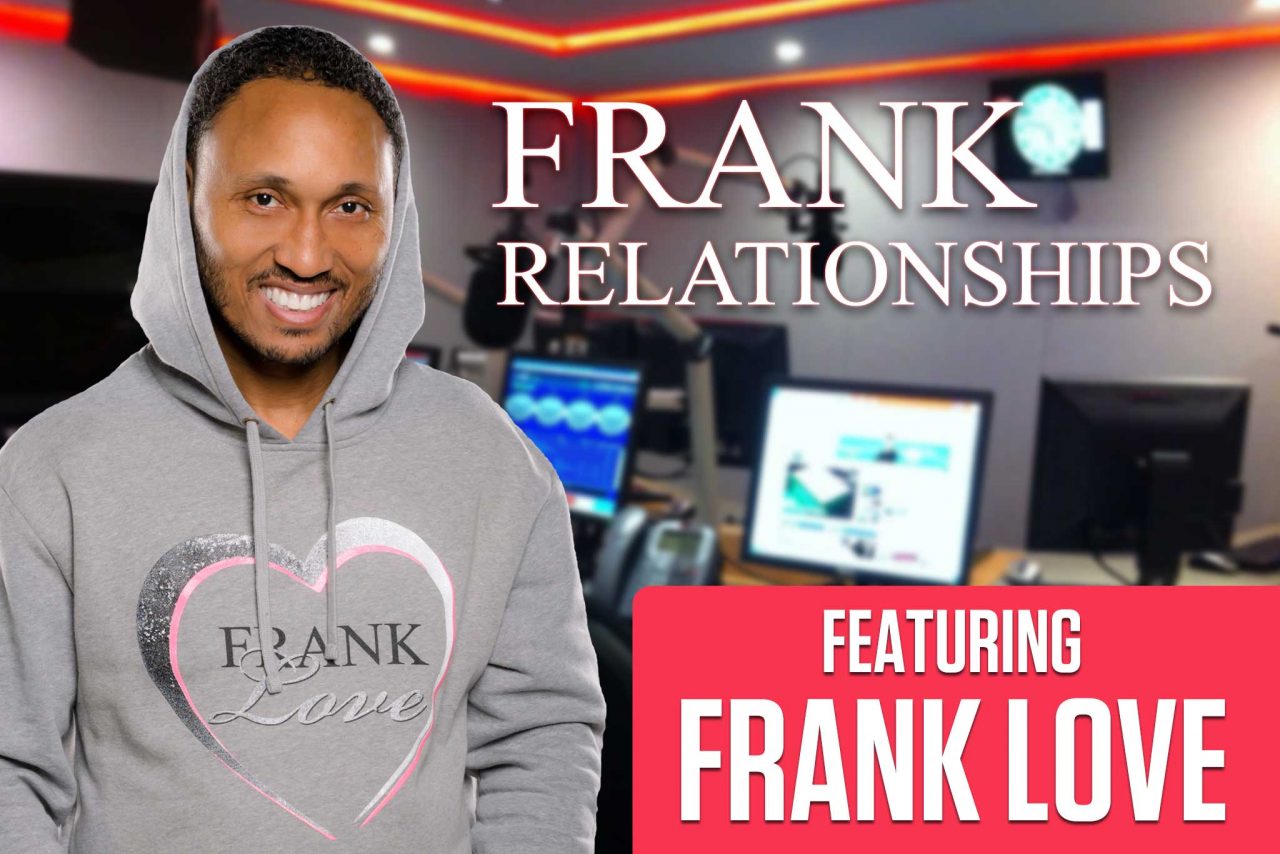
Podcast Episode:
The champ is here. He’s in the hearts of your Frank Relationships team. Were talking about the late, the great, “The Greatest,” Muhammad Ali … on this edition of Frank Relationships.
____________________________________________________________________
FRANK RELATIONSHIPS: MUHAMMAD ALI REMEMBERED FEATURING WALTER MOSLEY
Guests: Walter Mosley, et. al.
Date: June 6, 2016Frank: Yes, the champ is here. He’s in the hearts of your Frank Relationships Team. Yup, we’re talking about the late, the great, the greatest, Muhammad Ali… on this edition of Frank Relationships.Yeah. As always, those are my babies. Thanks for getting daddy’s daughter today.On Friday, June 3, one of my heroes died. But to call him my hero is an understatement. In fact, I’m in significant company throughout my region, the country and the world. The man thatwon the heavy weight championship of the world 3 times, that gave us some of the most mind-blowing fights ever and it gave up millions of dollars, and is primed to take a stand against fighting those who he had no quarrel with, risky prison, bankruptcy and his reputation has died. But oh is he remembered and we’re going to give him the best send-off that we can muster today.
So to that end, we’re going to get things started with one of my favourite authors. After Ali’s death, he wrote in our bed in the New York Times titled “Muhammad Ali’s Shaked My Life”. He’s also the man that has given us characters such as [unclear] EZ Rollins, Phyllis Jones, Socrates Fortlow, Leonid McGill and the most dangerous man in Los Angeles, Raymond Alexander, otherwise known as Mouse. He’s the author of “Devil in a Blue Dress” and recently “Charcoal Joe” and “EZ Rollins Mystery”.
And when I heard that Ali has passed upon compiling my listed of people that I wanted to interview about Ali on the show, his name was at the top of the list because I fee 100% confident in saying that this man loves his people. He’s none other than Walter Mosley.
Welcome to the show, Brother Mosley.
Brother Mosley: Why thank you very much.
Frank: What did Ali mean to you in your early years?
Brother Mosley: Muhammad Ali, I mean, I’m not sure I have a great deal to say about him. That doesn’t mean I don’t have some great details to say about him. It’s just that, we talk about him—there are many things to say but after a while, there are a lot of like great people, you can give a whole bunch of list. They did this, they did that, they did this, they did that. But there’s only one thing that I think is really, really important about Ali and his relationship [unclear], maybe it’s two things.
One is that he through all of his fame and all of his honor and all of his influence, we made pretty much a regular kind of guy, like a worker. And that part of that has to do with the fact that he was a boxer, and in order to be a good boxer, you got to do the work. You [unclear] but you can’t be “Oh I’m so famous. I could be a boxer” or I used to say “I’m so pretty. I’m going to be a boxer.” No, you had to work and you had to work really hard. So I think that everyday people all over the world from China to [unclear] the kind of work that he had to do to be who he was. And I think that just sharing that knowledge and sharing that thing but he also stayed a normal everyday guy.
And so, my amazement which I think most everyday people are making a creation with sunlights and insects and machines and gravity and rainbows, all that stuff I think was a part of his life. You thought that when you saw him if you had the opportunity ever to talk to him, even if you just listened to him. He was the kind of guy—he spoke in a way that appreciated creation, that’s capital C, Creation. And so I think that for me, that’s the most important thing that he was able to be at once our hero and one of us.
Frank: Indeed.
Brother Mosley: Never a lot of heroes were not one of us. They’re heroes but they’re on a pedestal somewhere but he was our hero and he was one of us. The second thing that I think it’s so important about Ali and that I love so much is that I said in the little piece that I wrote for The Times, I was—some other kid, high school or early on high school, we listen about the anomalies and about the [unclear] unless they look I am not going to Vietnam. Number one, because I don’t want to get shot; number two, that I have no desire to shoot any Vietnamese first.
And I said it, when I said it, I didn’t realize I was saying it. I didn’t know where those words came from.
Frank: Where did I get that from?
Brother Mosley: I just said it. And then, sometime later, I realize… Oh I guess that’s Muhammad Ali.
Frank: Right.
Brother Mosley: [unclear] maybe I didn’t mean what he said or heard what he said but he had such power and influence that the life I live to some degree was influenced by the life he was committed to.
Frank: That’s powerful.
Brother Mosley: And so… Yes?
Frank: Well one of the things you said was that about him being an everyday guy and a boxer. And you can’t really be a good boxer and not be able to be around everyday people because you have the [unclear], —
Brother Mosley: Yes…
Frank: —you have to work with other fighters and the other fighters, all of the other fighters that are going to keep your game top-notch, they’re not saying this. So you got to be able to deal with other—
Brother Mosley: Yeah.
Frank: —brunts in many ways. People who are not [unclear]—
Brother Mosley: You have to be ready.
Frank: Yes. Yep. And something that is a strong correlation between Ali and your work is strong black men. One of the things that you do, I mean if there’s anything you do—I mean, your characters are rooted and strong black men. They could be on either side of the law but you constantly have strong black men in your work. I appreciate that to know in and that certainly I’m sure how most of the world sees Muhammad Ali certainly how he saw his self and is definitely how I saw it. Any thoughts on that?
Brother Mosley: I read about black male heroes and there is no greater American black male hero in the world than Ali. Ali was a hero to people [unclear], in Beijing, in Sweden, in Peru… I mean, there’s nobody—every Mexican who loves boxing, loves Muhammad Ali because the truth is, he was in many ways, the [unclear] man. But he was also a black male hero. And very clearly, a black male hero because he was—his pride in his race outstripped his pride in his nationality.
And so, the idea is a lot of people like maybe [unclear] Patterson or [unclear], which I—I’m proud to be an American, that’s really good. That’s wonderful. And you should [unclear] here, there’s no question. But Ali’s saying I’m proud to be black and even he was talked about, the Vietnamese he said, “my brown brother”. There’s a motion of the heroics that he—[unclear] because he was careful. [Unclear] in a hero say, “Well I’m and example. You should follow my example.” Ali didn’t say that.
Frank: Right.
Brother Mosley: Ali would say, if the [unclear] he’ll say, “I’m not saying what everybody else to do. This is what I should do.” At the same time, he would tell a poem, “Float like a butterfly, sting like a bee.” “One day young man,” whatever he was doing, he was having a good time. He was out there for us and he was [unclear] you should be having a good time too. You know… because you have to work hard on you but you can’t all the time.
Frank: Yeah.
Brother Mosley: And I think that—so there’s a beauty there [unclear] becomes very broad. You don’t want to get stuck in some kind of thing like I’m an example for other people, well I’m an example for other people. I mean, I’m [unclear] and look at me and they said “wow, that’s great.”
But I’m living my life, you’re living your—I make my decisions, you make your decisions. But I’m there with you. And it’s a big a difference in being [unclear] Martin Luther King, [unclear], Mandela… You know, definitely… And all of them are great but one of the wonderful things about Ali is he didn’t have anybody… I mean, he was [unclear] but still, the way he moved, he really didn’t have people behind him. It was him. He’s the one who paid the price for all those blows to the head. He’s the one who paid the price to think I’m not [unclear]… He’s the one who paid the price every time he ran a lap, every time he had a sparring match… And what’s so wonderful about working, [unclear] everybody to say “I’m a hero and I’m a hero for everybody.”
I mean, it was a beautiful moment where he’s… white reporters and they’re like trying to interview Ali but he was surrounded by Ali’s black body guards and the body guards had it rough with the black reporters. And Ali, you could just see that it was [unclear]. His hands just surrounded the guys and he said, “No, no, no we’re not doing that. Isn’t it you’re trying to talk to me? They’re not doing something bad.” And you got to go well he was being a hero for me watching for the body guards who might have been making a mistake and for the guys who were about to get their ass get kicked.
Frank: Right, right.
Brother Mosley: All of that at once. And that’s who he was, that’s who he is. It’s not like I feel like I own him or I didn’t meet him once but [unclear] is that he is—he belonged to all of us and as far as I’m concerned—and this is like talking about somebody in your family— I don’t think he ever made a mistake in his life.
Frank: That’s powerful. Any thoughts on Malcolm X or Elijah Muhammad?
Brother Mosley: [unclear]… I mean, both X and Muhammad watched their parents murdered in front of them by members of [unclear]. Both X and Muhammad had gone through the ugliest, most vicious part of America. They in their own ways, tried to articulate a moment that could relieve the pain. And I think both of them that that was their job, that was their commitment to relieve the pain. You know, Malcolm X is one of the most brilliant men who ever lived in America.
When I was talking about Muhammad Ali, [unclear] whole other thing. These people I didn’t really fix [unclear] books and Ali, the ones to a [unclear] company. It’s like—that seems like [unclear] and less important but indeed, we’d all been. There are few of us [unclear], you know.
Frank: Was there any fight that comes to mind that you were emotionally invested in or didn’t stand out?
Brother Mosley: That’s the thing about Ali. It’s when… [unclear] answer question like this. Ali said “I am the greatest” which is a statement which I think is greatly misunderstood. Because somebody else say “Oh no, no, no, [unclear] was the greatest. No, no, no [unclear].” [unclear] is the greatest.
But that’s not it. That’s not it at all. Ali could win any fight. Even if the person he was fighting sort of won that fight. But your [unclear], [unclear]. You know, the [unclear], I don’t know about that. I don’t think he could have beaten Ali at that time.
The direction of [unclear], I mean there were people there that had all the talents to be Ali. And he was the greatest because he did not allow that to happen. It’s not like he was…
Frank: [unclear]…
Brother Mosley: It’s like you know… he, yeah… He did whatever.
Frank: He did what he could when [unclear].
Brother Mosley: He had a psychological attack, he out-thought them physically on the ring, he made them believe one thing when indeed something else was true. And sometimes, he just [unclear] love.
Frank: So do you [unclear]?
Brother Mosley: [unclear].
Frank: Did you think he would be Foreman, walk—sitting at the beginning [unclear]—
Brother Mosley: Nobody thought—listen, he is the only person in the world and of course the people [unclear] later… That’s [unclear].
Frank: Okay.
Brother Mosley: [unclear] he could be formed.
Frank: Right.
Brother Mosley: That’s like, you know. Really, honestly, he really could be Foreman. You know? On the other hand, everybody [unclear]. And he did but just really, you know. It’s you know [unclear] and really I should probably go after this. Another thing that [unclear] written about too much [unclear] I thought was really wonderful about Ali was he fought every fighter on their level. So you see in a lot of fights, like those [unclear] and Germany, when he was waiting for [unclear] Supreme Court was, whether he was going to get a trial or he was going to go to jail, what was going on… He fought those [unclear].
Frank: Right.
Brother Mosley: You know, he fought [unclear] 15 [unclear] whatever was at that time and it was interesting he [unclear] for the fight where his opponent [unclear] to the fight. It was something about that dialog, that physical language which is really, really interesting. It’s scientific [unclear], let me see what you do. Okay, you do that, this is what I do, you know.
Frank: Right.
Brother Mosley: And it’s kind of amazing. That’s why—one of the things that he always did was that he always gave the audience a great fight to watch.
Frank: [unclear]…
Brother Mosley: I can’t remember the number of times he knocked somebody out [unclear] in the third round.
Frank: Right, right. And he [unclear]—
Brother Mosley: But he was better than [unclear]…
Frank: —which was it added a level of drama to it and fun for the audience also.
Brother Mosley: And there’s also—I don’t think he—I’m not completely convinced that he was trying to entertain. I really think that [unclear] that if you could [unclear] my head, you will see a boxing gloves [unclear]. I really don’t think that he was experimenting with every fight that he had. You know, which is why they were all such different fights and why they were almost also interesting no matter how bad [unclear] he was fighting.
Frank: Thanks for joining us today, Brother Mosley. Thank you for your novels. Thank you for your rich characters and characterizations that you give us. I hope I get a chance to have you on the show again in the near future to talk to you more about you and your work.
Welcome to Frank Relationships. we are the show specifically tailored for my middle-aged brethren and those who love them. And we promise every listener, especially our brothers, that you walk away from each week’s show with new information, new perspective or a new disposition that will help you be a better parent and partner.
I’m Frank Love and you can find me, my blog and my various social media incarnations at franklove.com.
You can also find me on ABC’s Good Morning Washington most Friday mornings during the 9 o’ clock hour. If you’re listening to the show on Blog Talk Radio, please follow us and if via iTunes, please subscribe so that you can effortlessly get each show each week.
Also, if you’re enjoying the show and of course you are, please share with your family and/or friends on your favourite social media platform. We are looking to add new friends to our social media family over the course of the next week so please help us, help our community by spreading the word about the show.
Greetings to my co-host, Kweku.
Kweku: Hey family, how are ya’ll doing?
Frank: Great. How are you?
Kweku: Good. Frank, you good?
Frank: I’m great.
Kweku: Excellent.
Frank: Nancy Goldring.
Nancy: Hi, Frank.
Frank: The consummate generalist, how you doing?
Nancy: I’m great, how are you?
Frank: Good, good, good.
Nancy: Great.
Frank: We’re also joined by today’s visiting co-host, Yao Dinizulu. Greetings, Brother Yao.
Yao: Greetings, Frank. How are you?
Frank: Great, great. Who are you and what do you do when you’re not co-hosting?
Yao: I’m an international specialist in tort litigation.
Frank: Got ya.
Yao: [unclear].
Nancy: For somebody…
Frank: It is for somebody. Who do you think you’re going to get along with best today? You got me, Nancy, and Kweku.
Yao: I’m taking bets.
Nancy: Smart answer. Oh my goodness…
Frank: As is the case this week with Brother Dinizulu, there’s a visiting guest host chair available each week here in the studio. If you’re in the Washington D.C. area or travelling to the D.C. area and want to join us in the studio on a given Thursday morning, email me at frank@franklove.com and let me know.
We’re talking about the late, the great, the greatest, Muhammad Ali on this edition of Frank Relationships. So if you want to know how Ali saved one brother’s butt in the south, how Ali’s death marks the end of an era and how much a 90-year old man respected Ali the stay tuned as your Frank Relationship Team talks with a sampling of those that love and respected the greatest.
I probably don’t need to set the stage for our listeners but if there’s any value in capturing the tension in the air around some of Ali’s fights, I’m going to let Brother Preston Riddick chime in. This brother’s 75, he’s one year senior to Ali and here’s what he had to say…
Preston: At that time when Muhammad Ali first came on the scene, we go all the way back with him when he [unclear] in Louisville so everybody was [unclear] in making sure that this man was for real because he was—that was the time he was doing a predicting—I would say Ali had the same effect on the African-American community as [unclear] did. When he won the fight, we would always win the fight. The time that he beat Liston was almost kind of unbelievable because Liston has such a serious reputation. He was known that if he hit you on your arm, he could knock you out. That put people in kind of a state of shock for he was able to do it. And you know, he did it quite easily by using those skills that he has.
The second fight, we’re still trying to identify that punch that knocked him out and everything. That fight had a lot of controversy to it because of that punch. Suddenly it was [unclear] with the mob and there was a—we weren’t quite sure whether that punch was legitimate or if the fight was a thrown fight but Liston was told to take a [unclear]. I don’t think Ali had anything to do with it.
Frank: That was Brother Preston Riddick, weighing in. For the past 10 years, if you would ask me, I would have noted that I would definitely be at Muhammad Ali’s funeral. No matter when or where it was. However, his funeral has fallen on June 10, the day of my daughter’s high school graduation and I cannot be there. when the day of the funeral was announced, my wife looked at me and said, “You’re really affected by his passing.” And I looked at her I bewilderment like she was speaking another language. I am really affected by his passing. And with that said, I wish to honor him. Yes, I do. But I didn’t experience Ali firsthand like so many others, like my mother and father’s generation. I’m a whippersnapper, yup. At 43, so I along the past week made an effort to reach out to my elders to get their impression of the greatest and the most eldest was Mr. Jackson Girth who’s 90 years old. Here is Mr. Girth’s comment…
Mr. Girth: Muhammad Ali to me under the circumstances that he was born into this world was the greatest man [unclear] feel he was [unclear] I the world. If all the Americans [unclear] were like Muhammad Ali, being this [unclear] could not express how great he is. I can express how great Muhammad Ali.
Frank: That was Mr. Jackson Girth, 16 years Ali’s senior and he had that level of respect for him. For as long as I can remember, Muhammad Ali has been part of my world. When I was a boy without a real understanding of his rig accomplishments, he was the greatest fighter that ever lived and my father and every man that I knew loved and respected him. I watched a Saturday morning cartoon and remembered my father taking him to one of his exhibition bouts. My pop also took me to see his movie, The Greatest. I seriously doubt I understood much of it but as far as I knew, Ali was undefeated in the rig and can walk on water. His hands were literally lighting fast and he was undefeatable.
Nancy: They really were.
Frank: They really were.
Nancy: They really were. It’s funny, your… What did you say, 43?
Frank: 43.
Nancy: So I’m 52. So when I was little, I remember bouncing on this edge of my grandparent’s bed like watching the fights. And the fight would come on, it was a huge event in the house so dinner had to be cooked, eaten and done so that we can all be in full readiness for this experience. That’s what it was. It was an experience and I was little and yet I was old enough to get the energy and the enthusiasm of the event. I felt very clear about who Muhammad Ali was, not just as a fighter but like 4 people. I felt like I know my grandparents didn’t know Ali personally but it felt like they did it really felt like they did.
Frank: He was—your grandparents were undoubtedly older than he was.
Nancy: Sure.
Frank: But he—
Nancy: My grandmother’s 88.
Frank: But he mattered to them.
Nancy: Yes. Oh no question, no question.
Frank: I say his hands were lightning fast but if you really fast forward 15 years or so from the period where I was having those thoughts as a kid—
Nancy: Sure.
Frank: —Sugar Ray’s era had pass and I found myself actually watching an Ali fight. Instead of just relying on the myth and the fight I watched—the first one I watched was against Ken Norton. I thought there would be just sheer dominance, you know, nobody could possibly beat Ali! But Ali got his tail handed to him..
Nancy: Yeah. Hand it to him. Exactly.
Frank: It was—he lost that fight.
Nancy: Yeah.
Frank: Now, the sequel came on. I was watching like ABC’s Wild World of Sport so some repeats of old fights. It could be cable, I don’t know. But that Ali to me at that time, he didn’t really look impressive at all. The sequel to that fight came on, the Ken Norton fight 2.
Nancy: Right, right.
Frank: And I didn’t think Ali was much more impressive in that fight but the thing is, when you watch Ali fight, you had to be clear about what you were looking at because it didn’t even look like he was hitting these guys that hard. He as so fast and… he was just different.
Nancy: Yeah.
Frank: The way he hit, the way he held his arms, his speed was different than anybody else out there. So—
Yao: Especially for a heavyweight.
Frank: Especially for a heavyweight. You had to really know what you were looking at.
Nancy: Right.
Frank: And in fact, in the second fight against Norton, Howard Cosell said during the fight “Anybody watching Muhammad Ali tonight must now be convinced that he’s no longer a great fighter.” That was… And that was—
Nancy: That was a blow.
Frank: That was a—
Kweku: He was a—
Frank: The second one,–
Kweku: Ken Norton.
Frank: I’m not—I got it somewhere here in my notes, Will no I don’t know at the top of my head.
Nancy: Yeah.
Frank: But Ali won that fight and I started asking myself what all the fuss was about pertaining to Ali. My first and my first stop was with my father so I told him “seems like Ali wasn’t as great as I thought that he would be.” And I mentioned the fights that I had just watched and my father explained that Ali fought most of that first fight with a broken jaw against Ken Norton and that it wasn’t simply one fight that made Ali great but a series of fights and the story associated with him, and that’s what made Ali great.
Nancy: No question.
Frank: And it’s funny, as powerful Ali as Ali’s stand was in the Vietnam invasion, there are two names that do not come up in most news stories. If you listen to the news as they’re discussing his death, two names don’t come up that were incredible forces behind his consciousness. They were Brother Malcolm X, also known as el-Hajj Malik el-Shabazz and the honourable Elijah Muhammad.
We can’t really have a complete conversation about Ali’s political perspectives without discussing these two.
Nancy: No way.
Frank: It’s not possible.
Nancy: No way.
Frank: You might call them Ali’s father and grandfather or older brother and father but whatever you call them, they must be mentioned.
Nancy: Oh.
Frank: If you don’t—you’re not really talking about Ali.
Nancy: Ali.
Frank: You’re not really…
Nancy: You’re not at all.
Frank: You’re giving your version of it.
Nancy: Yes.
Frank: Here’s what Sister Geraldine 7 X had to say about Elijah Muhammad and the nation of Islam…
Geraldine: The education and knowledge itself was the key because people who were down and out on drugs, they were able to clean up just based on knowing who they were. I’ll tell you today, I had moved on from Islam but that’s my foundation. I consider to honor Elijah Muhammad as my parent. Now I know everything was at 100% but that was my foundation. It’s just like my grandmother. She raised me with a 4th grade education but she gave me the knowledge to go seek more knowledge. And that’s the way I [unclear] Elijah Muhammad. I was just sitting and having a cup of coffee and my daughter had given me a book “How To Eat To Live,” it was sitting on my table and I was just saying, “Wow,” I said “back then, we were taught to eat the brown stuff—the brown rice, the brown sugar,” I said, “and now, today everything is full circle.”
Frank: And we also have the pleasure of Ali’s own words about the matter.
Muhammad Ali: You are a wise man. You are an intelligent man and if I was not a Muslim, I’ll follow them and be Elijah Muhammad. I couldn’t talk to you for two minutes and I believe I can hold my own as intelligent conversation with you. But it all come from [unclear] Elijah Muhammad. But people praise me, “Oh you should be the leader. Well you going to follow Elijah.” Man, are you fool? Everything I got come from him. He taught me who I was, he made me proud, he made me [unclear], he made me love my own, I’ve turned down millions to keep from selling out my people, the beautiful name Muhammad Ali, I may have 56 Muslim invitations by governments, all they ask me about when I go to those countries “How is Elijah Muhammad?”
Frank: And we’re also pleased to have with us a personal friend of Ali’s. In fact, she notes that her late husband introduced Ali to the honourable Elijah Muhammad.
Nancy: To the nation.
Frank: To the nation, really.
Nancy: And a large [unclear]…
Frank: Aunt Shirley.
Shirley: Yes.
Frank: Hello. How are you?
Shirley: Hello, how are you?
Frank: Thank you for joining us. How’d you know Ali?
Shirley: Jeremiah, my late husband, was the minister of honourable Elijah Muhammad had placed him in that position over the southern region and the [unclear] in Miami was one of the temples that he set up and that’s where Muhammad Ali came into the nation of this [unclear].
Frank: And what was his relationship with Ali like?
Shirley: Jeremiah?
Frank: Yes.
Shirley: Jeremiah travelled with Ali. In 19—I guess 76… ’76, ’77, he moved to Chicago to be one of Ali’s religious… What would I say… Religious—
Nancy: Advisers, counsellors?
Shirley: Yes. Thank you.
Nancy: Okay.
Shirley: Counsellor. And he also works with Ali in some of the business aspects of there in Chicago.
Frank: What’d you think of what I said about “you can’t have a conversation about Ali without” in his perspective?
Shirley: Oh I agree, 100%. And it just amazes me how everyone has talked about it, becoming a Muslim and no one—I have not heard of one person other than yourself mentioned the fact that it was Elijah Muhammad, honourable Elijah Muhammad who was instrumental in changing and making pathways in this man’s life that he would be the person that he wound up being for the world. It was Elijah Muhammad and Muhammad always referred and deferred to Elijah Muhammad as his religious and spiritual inspiration.
Frank: And that was for as long as the honourable Elijah Muhammad was alive, wasn’t it?
Shirley: Absolutely.
Nancy: No question. No question.
Shirley: Absolutely.
Frank: What about his—what about Ali’s relationship with Malcolm X? Would you talk about that a little bit.
Shirley: Well, Malcolm came to Miami, Jeremiah I think contacted him and told him about Ali. When he had that fight, that first big fight, I think it was with… Who was it…
Frank: Sonny Liston?
Shirley: I can’t think [unclear]…
Frank: Sonny Liston?
Shirley: Sonny Liston. Malcolm was there for that—yeah, Malcolm was there for that. Jeremiah was there. Jeremiah introduced Ali to Herbert Muhammad who became his manager for a period of time. But Malcolm was—he and Muhammad had a good relationship.
Frank: And would you say he was a strong influence on him?
Shirley: You know what, Elijah Muhammad was a strong influence on him. I must be truthful.
Frank: Okay, alright.
Shirley: That’s where the influence came from honourable Elijah Muhammad.
Frank: And what was your experience? Did you have any personal experience with the honourable Elijah Muhammad? And what did you think about what he was able to do for black men throughout the country?
Shirley: You know, there has not been another black leader, in my opinion, that has well… Elijah Muhammad was the first one that this thing “I’m black and I’m proud,” that was Elijah Muhammad. He was the first one who taught us to be proud of our heritage, proud of our color. You know there was a time in my life when a black person will fight if you called him “black”. It was so despicable. We were made to believe that we were so inferior, so much of nothing until we took on that same attitude with each other.
So I can’t say enough about this. It’s just—
Kweku: Was he a [unclear]?
Shirley: It was a wonderful tie in my life.
Nancy: Was he a what?
Kweku: Was he a fight fan?
Nancy: Was he a fight fair? Was Elijah Muhammad a fight fan?
Shirley: Yes, yes, yes.
Kweku: Okay. Malcolm X as well?
Shirley: And he be loved—he’d loved Ali.
Frank: Ah okay.
Shirley: [unclear].
Frank: You got—
Shirley: I was not a fight fan.
Nancy: You were not a fight fan… Aw, Shirley…
Shirley: No, no absolutely not a fight fan…. and never have and not to today. But I was an Ali fan.
Nancy: How about that? Isn’t that interesting? Isn’t that interesting? Now how do you be an Ali fan and not a fight fan?
Shirley: No, Ali had so much presence.
Nancy: Okay.
Shirley: When he walked into a room, I mean, he loves the room. It just—his presence I cannot even express to you how this man, what he gained coming into the nation of Islam, it was the pride that Elijah Muhammad instilled in black men. I believe that, and he taught us, the believers just to be fearless. So I mean, when we were in Mississippi, Alabama, wherever, there was never any fear of what was going to happen to us. And I—
Frank: That’s powerful.
Shirley: And I can’t say enough about that and I—Ali took on that trait, so strong.
Frank: You know, I can relate to walking into a room and people feeling so much—
Nancy: You know what, Shirley, I just want to apologize… This show has taken its down turn but I’m going to do what I can to bring it back…
Frank: Well forget you all then…
Nancy: On Shirley, talk to us a little bit about how you can have a friend with all that presence, all that charisma, and all that energy but yet, he just feels like a friend. He was a regular guy to you.
Shirley: I am someone—since Ali’s death have shown me pictures that I was it. I did not think I had ever taken a picture with Ali. S
Nancy: Wow.
Shirley: He was my friend. I would go to Deer Lake with another friend of mine, Mini Ali. I would go to Deer Lake, we would take the children, we would stay. We stayed for weeks sometime. It was that, that, that camp was so wonderful and so much of nature there. He was always in the dining hall when you came in, Ali just loved people.
Nancy: Yeah.
Shirley: And I don’t care if they’re black, white or mushroom. He loved people. And you got that feeling that somehow when I was around him, and maybe that I knew him so early on—
Nancy: Okay.
Shirley: —that, I mean he slept in my home with his first wife and her family were Muslims and it sort of put a bond there but it was—I don’t know how… We had a humble place at that time and Ali came, he stayed, he ate, he talked and he was a friend. We talked about the religion, how we perceive that it would be years from now and all of the things we talked about and all that Elijah Muhammad ever told us that would happen with Islam and at that time, to be a Muslim, you were just… Oh it was like you were the worse person on earth.
Frank: Yeah. There was a time… My understanding, this is preemie. There was a time when I understand that black people and chritianity went hand-in-hand. I mean, you didn’t even question.
Shirley: Absolutely. It was just wasn’t—you didn’t question what you were—you saw a black priest, you were a Christian.
Frank: Yeah, yeah. And then the introduction of Islam was just something completely new.
Shirley: It was just something that… Yeah. I didn’t—that even I did not understand what. I know Elijah Muhammad told us that there would be a time that we would hear Muslim things in America, that the press would be full of Islam. I mean, he was a man we say now that he was not The Prophet but someone had given this man some very good direction because he was only—I think a 5th grade student.
Frank: Wow.
Shirley: And there was no way he could have pulled this out of his mind with his humble beginnings but it was a really wonderful, remarkable experience that I am very thankful for.
Yao: What’s interesting what you’re talking about, the Christianity and the fact that black people at that time was focusing… We’re not supporting other religions is that he was able to rise above that. Muhammad Ali was able to make you love him even if you didn’t like every part of him.
Shirley: That’s right, that’s right.
Frank: Have you watched any of his interviews? I mean, I watched the interview with him and Foreman on like the Dick Cavett show. Ali was a true entertainer. He had you laughing and poor Foreman… I mean, to try to go tip for tat with this guy with words, it was a waste of time. I mean—
Shirley: Foreman is a nice person.
Frank: I mean Frasier. Actually I mean Frasier. But Foreman is a nice person—
Shirley: Yeah.
Frank: —but for Frasier to go—
Shirley: Frasier, yeah…
Frank: Yeha…
Shirley: Trying to compete with Ali in intellect and words just….
Frank: Right. Leave that alone.
Yao: Stay in your lane.
Frank: Right.
Kweku: It was also interesting, we’re not even talking about boxing. You compare him to the boxers today, we probably primarily be talking about the sport of boxing but just to let you know the magnitude of his personality and what he contributed to the world as opposed to just a sport. Because if we would talk about Mayweather, we’d probably just be talking about boxing as far as talent and so forth…
Frank: Yeah.
Shirley: Absolutely.
Kweku: We really mentioned boxing in the last few minutes or so.
Frank: Right. That’s right, that’s right. Aunt Shirley, if there was any shortcoming that you would say Ali had, what—
Shirley: I wouldn’t discuss it.
Nancy: Ahhh…
Frank: I love it!
Nancy: I loved it. That’s awesome.
Kweku: Well what about challenge?
Nancy: That’s awesome.
Shirley: Ali said to some of the believers, we were talking sort of intimate and he was saying that you know, not to feel sorry for him but they always said that. But in this set he said, “You know, this illness is my ticket to the hereafter because I now focus on the religion and only the religion.” And I feel so much that this man, he had such insight in the world I think as he grew and with himself that he knew that you cannot be a spiritual person and a worldly person at the same time. So when the illness hit him, he submitted to it and looked at it as his ticket to the hereafter.
Frank: Well thanks for joining us, Aunt Shirley in bringing additional depth to our understanding of Ali.
Nancy: Yes, thank you so much.
Shirley: Oh you’re so welcome.
Kweku: We can talk to Aunt Shirley all day.
Frank: Yeah, yeah.
Nancy: Oh no question.
Frank: Up next, we have Brother Wazir. Brother Wazir was—
Nancy: El yeah.
Frank: Say that again, Nancy?
Nancy: Wazir El.
Frank: Wazir El. He was a security and worked with Ali for a period of time. Brother Wazir, are you there?
Wazir El: Yes, I am. Can you hear me?
Frank: Absolutely. How are you?
Wazir El: Oh I’m fine. I’m fine.
Frank: Thanks for joining us today.
Wazir El: It’s only in the morning I’m in the West Coast so it’s kind of early.
Frank: Okay. How did you know Ali?
Wazir El: Well I met Ali, I happen to go up there one weekend. I was visiting in—
Frank: Where?
Wazir El: —up in [unclear] Deer Lake.
Frank: Okay.
Wazir El: In Deer Lake, Pennsylvania and… Just ran into Ali and we started to talk. I was with my sisters, niece and [unclear] at that time and my mother, and we started to talk and he was a Muslim, I was a Muslim, we were both of the nation Islam and we just hit it off really well. And I asked him for a job.
Frank: Simple enough.
Wazir El: He said, “Sure brother. I can find something for you.” And that’s how our relationship started. That was about 1973.
Frank: So what was the culture like within the nation? What was the culture like within the nation and in the nation of the United States being so close to Ali?
Wazir El: Well, yes, yes understand something on…Being a Muslim at that time, being a Muslim was sort of like you were surrounded by space or something… The community looked at you as if you were aliens and especially following the honourable Elijah Muhammad and the nation of Islam. When Ali converted to Islam, it brought a new light to Islam and to our Muslim community. Ali was a very charismatic, a brother who was full of light and full of energy and he talked all the time about the honourable Elijah Muhammad. He just put Islam on a new level, in a national level through the teachings of Elijah Muhammad.
Frank: Yeah, absolutely he did. Yeah.
Wazir El: Elijah Muhammad gave him his foundation. See, Ali had a great personality. He loves people, he loves helping people. He was very humorous, he liked doing magic tricks, he liked entertaining people, he likes to talk, he liked the family environment. So when he accepted Islam and at that time he met Minister Jeremiah Shabazz and also brother in [unclear], Brother Rockman and those brothers, they sort of gave him a balance that he needed in order to you know, train in the area that he was going ot be because he was on an international level.
Frank: Yeah. The fights that he participated in the fights that he fought in, Norton, Frasier, well Frasier was 74.
Wazir El: Yeah.
Frank: Do you remember any of those? And do you remember—you got any stories for us that being so close?
Wazir El: Well Ali just amazed me, you know… You were talking earlier about his hands being in his quickness, he was very sharp mentally too. I used to watch him in the gym when he was training and some of his fights, it seemed like he had the ability to tell what punch that person, his opponent is going to throw in and he would be moving out of the way of the punch and so on the counter—
Frank: At the same time.
Wazir El: —before the guy could even sing.
Frank: Yeah.
Wazir El: You know he was just that quick. He was like a scientist and he used his, the saying “float like a butterfly, sting like a bee” and that’s exactly what he did.
Frank: Ali was… Well one of his sparring partners was Larry Holmes. Did you know him or did you see him around at that time?
Wazir El: Yeah, yeah. I saw him around. He had a lot of sparring partners. Yeah, Larry Holmes. I remember him. Yeah, very well.
Frank: What was Holmes like? And what were some of his other sparring partners like? Any stories there?
Wazir El: Well Larry Holmes, he was a quiet guy. He was at that time, he was very thin but he could see he was always watching Ali, always watched Ali and he took his—if you look at his… The way he fought, his style. He got a style from Ali and he was just… He was a very intense student and you could tell that he wanted to one day become champion himself. So Ali taught a lot of fighters. He was not just…
Frank: A fighter?
Wazir El: …somebody who came in the ring and boom, boom, boom. But the people he had around him, the fighters, his sparring partners, he would talk to them. He would always teach them. Tell them about themselves, try to snap around of whatever mood they were in and make them aware of what they had to do. Ali was a great businessman so he’s a great promoter. He surrounded himself with great people. What could go wrong?
Frank: We’ve been talking with Brother Wazir of the nation of Islam. At the time, he worked as security and he knew Ali personally. Thanks for joining us Brother Wazir.
Wazir El: Yes, sir.
Nancy: Thank you, Wazir.
Wazir El: Thank you.
Kweku: We should have asked him what that was like being security [unclear]…
Frank: That’s why you got a mic.
Nancy: Or the easiest.
Kweku: Nah, you know you seem to be enthusiastic about the stories. I wanted to know about protecting [unclear] yourself…
Frank: Okay. What you got there?
Wazir El: Really I was really—it was hard to be security for Ali.
Nancy: [unclear].
Wazir El: I was basically—I took care of his family when he travelled. His wife at that time [unclear] and his daughter Mae mae, I would drive them around, make sure his family was secured. After being security for Ali was you know, because Ali was all over the place. You couldn’t really secure him in [unclear].
Frank: Got it, got it.
Nancy: Wow.
Frank: Thank you Brother.
Wazir El: Yeah, you’re welcome.
Frank: Take care. It has been mentioned several times now the introduction of Islam into the conversation about African-Americans here in America was really attributed to the honourable Elijah Muhammad. This is one of the points that Baba Agyei Akoto touches on in the following clip. The quality isn’t as good as some of the other clips but his points are. So they’re well on-point and so please take a listen…
Baba Agyei Akoto:
. And we’ll just sit quietly while we get there in a while, chanting and [unclear]. But we [unclear] get quiet at some of the questions that [unclear]. [unclear]. We had [unclear] at that time. But again, it raised the question that [unclear]. And that he proceeded to his career in Miami [unclear]. [unclear] and raising questions about where were we? Where are we and what this movement [unclear].
Frank: That was Baba Agyei Akoto, co-founder and director of Watoto School. You’re listening to Frank Relationships and we’re honouring the greatest, Muhammad Ali. We got clips and personal accounts and I hope that you’re as humbled by each shared experience as I am. There’s a brother I communicated with on Facebook earlier this week. He shared a personal story that he had with Ali one where he might have gotten himself killed if Ali hadn’t seen it. Seriously.
Nancy: Wow.
Frank: Check out what Brother Renell Betz had to say…
Renell: In 1970, I was 16 years old. I went to Atlanta while walking around in the [unclear]. I happen to spot Muhammad Ali talking to a gentleman. I walked there, as I was walking, two gentlemen walked my way and I wondered that [unclear] and one of them popped and shoot me and at that point, he stopped and looked at me and said, “Well you just bumped into me. You need to say ‘excuse me’ ” and I said, “I ain’t saying nothing.” And he said, “You’re going to say ‘excuse me’ ” and I said, “I’m not saying nothing.” So at that point I began to become a little heat and [unclear] I’m not going to say “excuse me”. I’m not saying “excuse me” to you. That’s when Muhammad Ali [unclear] get loud and he came over and just said, “Hey, hey. You know, what’s the problem here?” and there was a white guy who told him that I had bumped into him and that I needed to apologize. Ali said, “Hold on, let me talk to the young man,” and he talked to me for a minute. Pulled me to the side and said, “[unclear].” He put his hand on my shoulder and said, “Look, you’re down here [unclear]” and said, “You can’t [unclear]. If you [unclear] it’s about making them think they win, they win. And see, by making them think that they win, you get the victory but they left with their stupidity.” And [unclear], he been go with some of the white guy and said, “Look,” he said, “young [unclear] didn’t mean any harm.” He says, “Why don’t we just forget the whole thing and everything will be okay?” And that’s when the white guy said, “He thought about this and said “Okay, Mr. Muhammad.” And he walked on his way.
Frank: as his name suggest to most, Muhammad Ali was a Muslim and Islam meant a great deal to him as his faith. To discuss Islam and Ali’s impact on the Muslim community, we’re joined by Muslim thought leader and activist, Tore Tore. You’re not one of Ali’s contemporaries and yet you have some thoughts on Ali’s impact in the Muslim community. What are your thoughts?
Tore: Just being unshamingly Muslim. I think in the age of the war [unclear], or ages it’s been a while since it started. I think also in the age of Islamophobia, which has become a folklore and [unclear] things now, Muhammad Ali stood for being unashamed of who you are and he introduced African-Americans and really the world to a brand of Islam that was completely different than anybody in anything that have been seen before. His Islam was directly related to liberation. It was directly related to our human rights struggle. It was directly related to social justice. And for the Muslim community right now with all that it’s facing, it’s just something that I can identify with because I’m an African-American and my parents and grandparents and much of my lineage has roots in the exodus of slavery and also my father became Muslim in the ‘60s. He started one of the first mosque, actually the first mosque in Maryland.
Frank: Was that under the nation of Islam or that was—
Tore: No, this is the first Sunni mosque in Maryland. But he came through that thing [unclear] of the nation of Islam.
Frank: Okay.
Tore: So it’s just very important that he even did the work that he did and spoke out the way that he spoke out because it’s just that much more comfortable for somebody such as myself today.
Yao: With his funeral that is going on today, what effect do you think the re-emergence of Ali in this big way and the manner in which he’s having his funeral have on the Islamic community of trying to bring or address the phobia against Islam?
Tore: I think one is the best ways to fight Islamophobia is to have people having me earnest questions, answers as possible. Even with yesterday, the procession that happened yesterday, you know him having traditional Islamic funeral. It’s going to have a lot of people who ask questions and that’s what you want to happen. And the more [unclear] questions people ask, the more they’ll know about just it is order the [unclear] almost 2 billion people on earth what it is about their lifestyle and the way that they’re practicing religion. What it’ll do is number one, even after 9/11, you started to see even more of the percentages of the people who become Muslim. They go up and I imagined, it’s just [unclear] in theory but what I imagined is you’ll see more of Muslim and it’ll be better for the Muslim community because then, we’ll have people be really come and try to, really make sincere inquiries about how we live our life and that’s something that doesn’t happen in America when you’re being [unclear]. It’s just like that’s the way they are and they’re bad people and we shouldn’t deal with them.
Frank: Thanks Brother Tore for joining us today. Brother Tore—
Tore: Absolutely.
Frank: —is a thought leader and activist of the Muslim faith. Take care, Brother.
Tore: Alright, Brother.
Nancy: Thank you.
Frank: As I said, I’m 43 and I feel a lost over the passing of Muhammad Ali. With that said, I know that there has to be even a greater sense of loss from my mother and father’s generation. They were, after all, age mates. In fact, there’s—in talking to them, there’s a feeling of an era ending. And so, to speak to this in part, I caught up with Baba Lumumba and he weighed in with these powerful words.
Lumumba: Being a person that was only a year difference in his age meant that he was a part of my life that his life paralleled my life in a depth that he was part of the same born, around the same time I was born, went through some of the things that I went through than we came this personification of resistance to the system. The question for many black people is “Can you resist the system and win?” Can you resist the system and win? In any way, can you declare victory after you fight against the system that oppresses you? Can you stand up? Can you have integrity? What do you gain? What do you lose?
What Muhammad Ali represented is what you gained from that resistance, what you gained from that integrity, what you gained from standing up fighting the system at all cost. No matter what the temporary loss seems to be. You and your fight can be victorious and [unclear] we will be victorious.
He sort of personified that motion to me and his death also represents the ending of an era [unclear] the era of the so-called [unclear] which really started the important thing, they started in the ‘50s that extended all the way up until what I call the period of Barrack Obama which is total different set of energy. It’s collaborate—his [unclear] Barrack Obama era is collaborating with becoming an ally, of being a supporter of [unclear].
Muhammad Ali represents being an opposition to the system, fighting it. Just like he fought his opponents on the ring and for the most part was victorious and certainly was victorious in terms of his overall sports achievement but he also fought the system that oppresses us that declares us to be inferior, the system that inflates us, the system that we constantly have to fight again, he was victorious in that [unclear] as well.
Essentially, he didn’t buy all the system [unclear]. I think that that was also an example of what was going on at that time. When you return to the ring by 71, you had of course the passing of Malcolm in ’65. You had the nation of Islam changing its [unclear]. You had you know, so which you found of sort of a mellowing. I don’t know if it was [unclear] with the mellowing. I don’t think he ever recounted or said that he didn’t believe what he think that he believed before.
Frank: Yeah, absolutely not.
Lumumba: So he never—he mellowed by [unclear]—
Frank: The only thing he did recount was his [unclear] of Malcolm X.
Lumumba: Yes he did… which was I think—
Frank: Powerful.
Lumumba: —the recognized was a big mistake and… but you know, that period of time and what was happening at that period of time is something that needs to be studied more. Now I know the popular narrative, atleast the pop culture narrative is that both him and Malcolm changed and they weren’t big fiery black [unclear] that they were. But I don’t believe that’s true at all. I think that… I think their mellowing does not represent changing, it just represents saying it, not saying it as firmly or as above [unclear] as you used to because as you get older, you’re really not able to do that [unclear].
So I don’t see it—and the thing that endears him not only to black people which is [unclear] what Malcolm X do, was that in-your-face, you know, white man as the devil… the [unclear], nationalist talk. Without that, neither of them would have been the force that they were in the world nor/and the fact that they took on all commerce, him and Malcolm. They took on all commerce. [unclear] like you don’t see it. You don’t see a debate in which Malcolm loses. You don’t really see a fight who was Muhammad Ali definitely [unclear] victorious. Even when he lost, you know you’re [unclear] just victorious in the sense that he comes back and he wins the next.
Frank: Yes.
Lumumba: So you have men who represented the—not only the struggle but the victorious struggle and personal victory, integrity and those things are what endeared him to black folks but it also endeared him to non-white folks and many white folks that you could see now. I don’t think I pick up the Washington Post on Sunday for example, to say “[unclear] picture on the front page.” But he has two massive pictures of him probably 10 others in the page. I don’t think there’s been a chain of hope or [unclear] one night or another who received as much coverage in the popular press has he had.
No what does that say? It means that they so deeply respect him. It doesn’t mean that they agree with him, it doesn’t mean that they’re not still an opposition to what he stood for but it means that they respect him so deeply. As that respect, I think that the person needs for themselves and that we need for each other, that [unclear] lives that demands respect. And you will be victorious. And to me, that’s what Muhammad Ali stood for, a man who demanded respect, who the whole world had to bow down their respect who essentially much to his grave believed that his job was to serve black people and the interest of black people.
Frank: That’s community leader, Baba Lumumba of the Emoja House and the Council of Elders in Washington D.C. You may remember a few weeks back when we are pleased to be joined by father, grandfather, husband and publisher, Paul Coates. You could check out that show in our archives at franklove.com but I also caught up with him after Ali’s passing and he had these powerful words to offer about him…
Paul Coates: Ali [unclear] a symbol of existence, a symbol of [unclear], someone who stood back to white people, white society and spoken in interest of black people. He did that [unclear] we were aware of his consciousness. But once [unclear] he just didn’t take no shit. He would not let people tell him what he was supposed to say and what he was supposed to do. The way he was supposed to say and the way that he was supposed to do it. That was a symbol [unclear] that we sorely needed. He was a man at the top. I mean, really [unclear] heavyweight champion. Heavyweight champions then for the most [unclear] that [unclear] was, like they were no [unclear] of [unclear], no [unclear] of [unclear]. Heavyweight champion [unclear]. That’s like the highest you [unclear]. You know what I mean?
Frank: Right.
Paul Coates: That was it. That was highly [unclear]. In the school, heavyweight champion my man. He cared about his god and he cares about [unclear] of black people that was going to be [unclear]. He had [unclear]. The man was dead. And he was an inspiring, an example of how we could be dead and how we could [unclear]. Yeah, yeah very, very much so. So he was very [unclear] of the generation to me.
Frank: That was Paul Coates. You’re listening to Frank Relationships where we promise every listener and especially our brothers that you walk away from each week’s show with new information, a new perspective or a new disposition that I hope you be a better parent and partner. You can find this in past shows, they’re over a hundred. And my blog at franklove.com. You can also purchase the first edition of my book “How To Gracefully Exit a Relationship” and ebook there. the hardcopy of the first edition sold out and the publisher’s working on bringing you the second edition soon. Again, that’s franklove.com.
I mentioned earlier how my father told me that there was more to Ali than his accomplishments in the ring but at that time, it didn’t make much sense to me. But I had the desire to kind of learn more about the myth and that myth I must say, it lingered. It was with me which is probably a tribute to the widely accepted greatness amongst my seniors, my dad, my mom, my uncles and aunts, and a lot of these—my grandfather and grandmother. And I began to watch his old fights—I’m talking about his real old fight like Sonny Liston, Zora Folley, Flloyd Patterson. These were the fights that he was in prior to being stripped of his title which it reminds me of a conversation that I had with the great boxer and trainer, Adrian Davis years ago. He said the most important punch combination was the one-two. That’s the jab and the power hand.
Nancy: Okay.
Frank: And he said, “Look at Ali. That’s all he threw.” And if you really think about it, that was Ali’s bread and butter—one-two, one-two. Just all day, one-two.
Nancy: He mastered the basics.
Frank: He mastered the basics and it was that over and over again. He beat everyone in his prime. It was—and this is what Adrian says, it was impossible to beat him. All he repeatedly threw was the one-two.
Nancy: Wow. Yeah, I think as a matter of fact, Ali had a camp for children and he taught much of what he knew. One of our former guests actually went to that camp. Yes. He sure did.
Frank: Who’s that guest?
Nancy: Akeem Scott.
Frank: Akeem?
Akeem: Hey, how you doing?
Frank: I’m great. How you doing?
Akeem: I’m doing great.
Frank: So you knew Ali?
Akeem: I did. My family did and he was an intimate part of—I mean a lot of your guests talked about just the effect that Ali had on their life. He continues to have an effect in my life. I mean, much of what I do kind of relates to my early background as a Muslim and the training that we received as Muslims. They called us the Junior [unclear], The fruit of Islam. We got training into martial arts and boxing and formal training and how to be a Muslim. And those early camps, they talked about the [unclear]. Those early experiences in the summer, I was going up to the camp and training, doing some of the children’s training. Just being up there, the beauty of it, it had a major effect on me as a child and it continues to have an effect on me as an adult. Pretty much everything I do from family, my occupation, how I see recreation, and even on how I make money. so he had a profound effect on my life.
Frank: Give me one of those Ali stories. Something you saw as a child that you can’t forget.
Akeem: Okay. So I’m in my teens, middle ‘70s at the training camp. The thing that was most impressive is just how Ali would take the time to come over to us as young kids and just spend indivi—you felt like you knew him as a coach person. He took the time, he knew your names, he interacted with you individually.
Nancy: Wow.
Akeem: And he’s zoned into you as a person. That to me was most memorable. Like I say, it’s some of the lessons that embody what I try to do when I’m with you, my own child. It’s just impactful. A lot of what I saw on him is just more how his behavior. That was the most impressive. So it wasn’t—I can say there’s a lot of incidents but is mostly for me, is mostly on his character, how he treated each person that was in front of him even the people that didn’t like him. Not to remember Heckle is. I can remember white folks would come and they try to play the whole superiority game and little increment and then they couldn’t get away with it in big doses. So its little increments of you know, “I’m really the boss here”. Ali would never confront these issues without animosity. It would always be with humor, misdirection, redirection, just a pattern interruptive, that’s a term that I like to use because that’s the way I saw it. It would interrupt what you had going on to really redirect it into a much more, I’d say pleasant, more believable and he would teach lessons in that way.
Nancy: Yeah.
Akeem: So you can never really nail him down to the whole racist thing. He will redirect you and if he was going to teach you a message, you couldn’t have your program running because he’s much more funny, much more believable and through the humor is how you would see it then all will see you go home thinking about it, you’re like, “Damn.”
Nancy: Right.
Akeem: It would be a message that will stick with you.
Frank: Resonate, absolutely.
Nancy: Nice. Thank you.
Frank: We’ve been talking with Brother Akeem Scott. Thank you for joining us.
Akeem: My pleasure.
Yao: You know, Frank, I just wanted to… You talked about our parent’s generation and how they saw Muhammad Ali but I’m 43 as well and if you recall, when we were coming up, he was already that superstar.
Frank: Absolutely.
Yao: And that superstar who we were seeing in the cartoons that was beating up Superman in the comic books, that guy was a sense of pride…
Frank: Absolutely.
Yao: …that was passed on through this superstardom—
Frank: Right.
Yao: And it was embellished upon by our parents. And so it gave us, I believe, a leg up and feeling good about ourselves and wanting to believe in that myth that you talked about and we made it true for ourselves as well.
Frank: Right, right. I like to say—well you heard me at the beginning say he was one of my heroes but I really think he was a superhero. Ali was…
Nancy: Superhero…
Frank: Yeah… And you now, Nancy, there’s something worth really bringing you into the conversation in another level as a woman. Because I mentioned my wife, she couldn’t relate. When I was visibly bothered by not being able to attend this funeral, my wife was like she didn’t understand. I mean, she cared—
Nancy: Yeah…
Frank: —and it mattered…
Nancy: Yeah…
Frank: But she didn’t understand the depth of caring the I had. And even, I remember going to see “When We Were Kings” —
Nancy: Oh wow, yeah…
Frank; —with my first wife when we were dating. She was—she didn’t get the—
Nancy: She thought it was a guy thing?
Frank: —the level of what Ali meant. I mean, it was… So I think the women in our generation don’t necessarily feel the same way as we do as men about Ali. I could be wrong.
Nancy: I hope you are. Because I remember going to see “When We Were Kings” and I was just…
Frank: Well you’re a little older than me.
Nancy: Yeah and I wonder if for your wife if it was—you know some people feel… Well you didn’t know them like you never have a physical face-to-face relationship with a person and oftentimes, it’s a celebrity how much could they have really—
Frank: Mattered to you.
Nancy: —mattered to you. And you’re right, I am a little older and I watched… I certainly never met Ali and yet watched him—
Frank: I met him.
Nancy: Did you really?
Frank: I did. I met him. He came with Howard.
Nancy: You see how he say that to the annual?
Frank: It was about 15 years ago when I was working in Howard.
Nancy: Wow.
Frank: Yeah, I met him.
Nancy: You were grown.
Frank: Yeah I was grown.
Nancy: Yeah, yeah.
Frank: Yeah. I even got a glove. I got a gloves that he signed.
Nancy: Come on?
Frank: Yes.
Nancy: Oh my goodness.
Frank: It’s in a undisclosed location.
Nancy: That I bet it is.
Frank: Save deposit box.
Nancy: But I’m a found out. Peel back the layers on that story. Wow, so then you do have a personal story. You made a connection. How’d you get a glove out of Ali?
Frank: Well there are two different—
Nancy: Ebay?
Frank: No, no, no.
Nancy: The heck.
Frank; I sent it to him. Well, first off, I was working with a non-prophet at that time. So I bought a pair and then our prophet bought a pair.
Nancy: Okay.
Frank: To send him to be signed for the auction that we were doing, Sports Memorabilia Auction.
Nancy: Sure.
Frank: Send it to him, he signed it, sent it back.
Nancy: Wow.
Frank: Yeah.
Nancy: Awesome.
Frank: So I got mine.
Nancy: Very good.
Frank: Yes.
Nancy: I got mine, he said. Wow.
Yao: How come you didn’t do one for me, bro?
Frank: Yeah well you know… Who are you?
Nancy: Bro, right…
Frank: I got one from Joe Frasier.
Nancy: Okay.
Frank: I got one from Max Schmeling.
Yao: Wow.
Frank: Yeah.
Nancy: I don’t even know Max Schmeling.
Frank: Sugar Ray Leonard. Max Schmeling was basically the… in some ways you could say Trumped up nemesis of Joe Lewis.
Nancy: Okay. Oh.
Frank: The German-American thing.
Nancy: Okay.
Frank: And I understand—I say “Trumped up” because I understand that they became friends.
Nancy: Okay.
Frank: and stayed in touch for the rest of their lives. And Max Schmeling was—mind you—he only died recently like within the last 10 yars or something like that.
Nancy: Sure, sure, sure…
Frank: So he signed the glove also for…
Nancy: Okay…
Yao: Yeah they pitted him as the—from a racial standpoint against Joe Lewis.
Nancy: Oh I got it, I got it. Because that’s what sold tickets.
Yao: Right.
Nancy: No doubt, no doubt.
Frank: I mean, but that was a Hitler thing all of that. So it was a lot going on.
Jeff: I’m older than all of you. So I grew up knowing Cassius Clay. Muhammad Ali was the most famous man in the world. Forget about Ghandi.
Nancy: Yeah.
Jeff: Forget about any other sports, hero of the time including Joe Lewis, Wilt Chamberlain, OJ Simpson. Ali was IT.
Frank: Jim Brown?
Jeff: Ali, everybody knew the name.
Nancy: I agree.
Jeff: And everybody has their own personal stories. I won’t bore you with mine. How could because he trained where I grew up for a couple of fights. But that’s neither [unclear] to that’s my story.
Nancy: Okay.
Jeff: More impactful than anything else, there is an entire generation of folks in the world now that say “We are hiphop.” Guess who started rhyming to communicate effectively.
Nancy: No question. No question.
Jeff: I’m sorry Afrika Bambaataa…
Nancy: Yes.
Jeff: Furious Five…
Nancy: Yeah.
Jeff: You know Treacherous Three?
Nancy: Take your space and—yeah.
Jeff: Ali is the king and father of hiphop communicating in rhyme, and he flowed.
Nancy: No question.
Jeff: Like no other.
Frank: And made you laugh.
Jeff: Oh my god.
Nancy: Unscripted.
Yao: Right. And what’s interesting about that is Muhammad Ali actually released albums where he was talking about his—before he even fought Liston, he put out an album talking about when he was going to knock Liston out.
Frank: An album?
Yao: An album rhyming. I was listening to it on NPR a couple of days ago.
Nancy: Wow.
Yao: I mean this guy was transformative. As far as how he made himself a superstar and made you believe in level.
Jeff: He was Bad Lung before [unclear].
Frank: Yeah, yeah, yeah.
Nancy: Muhammad said knock you out.
Jeff: The impact of media…
Nancy: Yes.
Jeff: Okay, now it’s saturated and anybody can vlog and… back in the ‘70s, there was this dynamic between Ali and Howard Cosell.
Nancy: Yes, yes…
Jeff: That was so deep,—
Frank: Yeah.
Jeff: —and so meaningful and entertaining—
Frank: Yeah.
Jeff: —and important because here’s Cosell, this aging Jewish lawyer, antagonist and respective sports guest, no question and they had this relationship that was magic. And then the transform—I remember Ali’s first interview that Marv Albert did with him and Ali had never talked to him before. Albert was already on his way up and for all intense and purposes, taking Cosell’s place as “that sports guy”.
Nancy: Okay.
Jeff: Okay? And he lays [unclear] “I never met you but I heard about you. You’re not as dumb as you look.” Who does that? He was the greatest, he was the greatest.
Nancy: Yes.
Frank: Absolutely.
Nancy: Cosell and Ali were a theatre to themselves. They really were.
Yao: One of my favourite things is when Howard Cosell said to him, “I think you’re being truculent.” “Well, whatever truculent is, if that’s good I mean—”
Nancy: Wow.
Frank: I got a Jim Brown story for you.
Nancy: What?
Frank: And that Jim Brown story is brought to you by Donald 9X. Here’s what he had to say…
Donald 9X: Jim Brown who’s in the Foreman camp go up in a [unclear] limo and he be the moviestar, you know, popular [unclear] play and then he was—he pulled up in a crowd quickly, came around him, you know. He was Jim Brown. He was admirable in our community also.
Frank: Right.
Donald 9X: And… I don’t remember when they did autographs but he shook a lot of hands and all of that. And then the question of who was going to win the Foreman-Ali fight came up. And he came out of his mouth with “Ali can’t beat Foreman.” He literally had to won and get back in the limo and get out of there because he was going to be mobbed.
Frank: Again, that was Brother 9X. In fact, Donald 9X was in the nation of Islam with Ali at that time. There was also—I mean, Jeff has weighed in. Jeff’s a white guy but there was also… There was a relationship—go, what you got to say, Jeff?
Jeff: Thank you for noticing.
Frank: Jeff is the only white guy that cared about Ali.
Nancy; Not by long shout, yeah.
Jeff: Before you make a point, and please don’t forget it, you asked somebody earlier was there any negative or any challenges with Ali… I found fault as did many African-Americans with the way in which Ali made fun of Joe Frasier, because of his skin tone.
Frank: Yeah.
Jeff: And it was very odd he was calling him—
Frank: Maybe not because of but…
Jeff: It would in addition to—
Frank: He did it.
Jeff: Right.
Frank: He definitely did it. And he may have done it because he was promoting the fight and it was just something to pick on him…
Jeff: Absolutely. But normally, he would antagonize due to talent or lack thereof. “I’ma beat you because of this, this and this.” Calling him “gorilla” and all the other stuff…
Nancy: Yeah, right, right…
Jeff: Because he was darker and you had the whole light skin darkening… That to me was one of the more negative things or you know, a chink in the arm or whatever you want to call it. Because people do put Ali on a pedestal and certainly in death and he will live on. The legend is there.
Nancy: Sure.
Jeff: That’s a lesson though that I think he did wind up apologizing for—
Frank: He absolutely did.
Jeff: —and remedied it. But it is part of his story.
Frank: Yeah.
Jeff: That should be mentioned.
Frank: And it was cruel. It was cruel. The thing is, there were two fights and I—to say there were two fights, there were three real fights. But there were two fights for each fight and that was the pre-fight build up—the war, the words and the actual ring fight. Ali won—I mean like we were saying, the war, the words was never a war. It was no—Frasier had nothing for him in that capacity. In many ways, it was cruel particularly the Thrilla in Manila. I believe that’s when he did the gorilla thing.
Nancy: Right.
Frank: Up until that point, I think the second fight he called him “ignorant” and even that was cruel. They were definitely—
Nancy: Below the belt.
Frank: Yeah, yeah. And now, if you just take that as pre-fight promotion, that’s fine. But Joe Frasier was bothered by this. He was sincerely bothered by this.
Yao: And was his family.
Frank: And was his family for like you were about say for a long time. I mean Frasier was bitter about this. That’s not something to take lightly.
Nancy: You can’t blame him.
Frank: You can’t blame him particularly because it was the case. I mean it’s one thing, if you look at Foreman, Foreman was—he went at Foreman in the same way “The Big Bear” and bear isn’t as insulting as a gorilla in the way we look at it. But he insulted Foreman, he taunted Foreman but Foreman, he had his moments where he was down and he was in the dumps after his lost to Ali but Foreman came back a lot earlier and with a better perspective than Frasier. Frasier was bothered [unclear].
Jeff: The reason why it’s so important and impactful is Ali was so important and impactful to black people and what they meant to society—not just America—worldwide society and by doing that, it gave those who found fault with African-Americans who could escalate themselves on a large scope. It gave those who found fault with that another reason to see—
Nancy: Right.
Jeff: —the [unclear] division within the race because of that couple of comments.
Nancy: Sure.
Frank: Here’s a quick clip on what Coach Bernie Bickerstaff had to say about Ali. He’s a former coach of the Washington Wizards…
Bernie: I haven’t met many people who would kind of stand up to what they profess and [unclear] at the least they [unclear]. Ali [unclear] who he was, was always from his center. No hidden agendas.
Frank: That’s Coach Bernie Bickerstaff. I was going to mention a few minutes ago, that Jeff is the only white guy that respected Ali and I had a chance to talk to a friend, Greg Henson earlier in the week. And here’s what he had to say about his dad and how he grew to appreciate Ali…
Greg: [unclear] might get [unclear] when he first came out of the scene, just thought he was a loud mouth jerk. So by the time Ali has retired, he was one of my dad’s favourite athlete the whole time.
Frank: Really?
Greg: Because [unclear] he was just a big mouth… that wasn’t [unclear] back then. That was the athlete, popping up censors [unclear].
Frank: Right.
Greg: But you know, I get a real problem with the Vietnam thing is because my brothers were there.
Frank: Wow.
Greg: Yeah but you keep around. I remember he lives [unclear] Olympic [unclear].
Frank: We’ve been paying our respects to the greatest, Muhammad Ali. Thank you to my guests, those that joined us today and those that provided pre-recorded statements, thank you to Atty. Yao Dinizulu, he’s a personal injury attorney in Chicago. Thank you to my co-hosts, Kweku and Nancy. Thank you to Jeff Newman, my engineer who I’ve worried the heck out of over the past few days as I’ve worked to try to make this show as meaningful as possible. And thank you for hanging out with the Frank Relationships Team today. You’ve been great.
I hope you’ve had as much fun as I’ve had sharing and hearing stories about one of my heroes, Muhammad Ali.
Let us know what you think of today’s show at facebook.com/relationshipflove, on Twitter at @mrfranklove or at franklove.com. If you’re listening via Blog Talk Radio, make sure you like us there and if via iTunes, make sure you subscribe so that you can receive each week’s show each week.
This is Frank love.
END OF TRANSCRIPT